Certified Holistic Pet Nutrition Expert Reveals…
What If The Food You Give
Your Pet Is Quietly
Shortening Their Life?How Real Food Can Add Years To Your Furry Friend
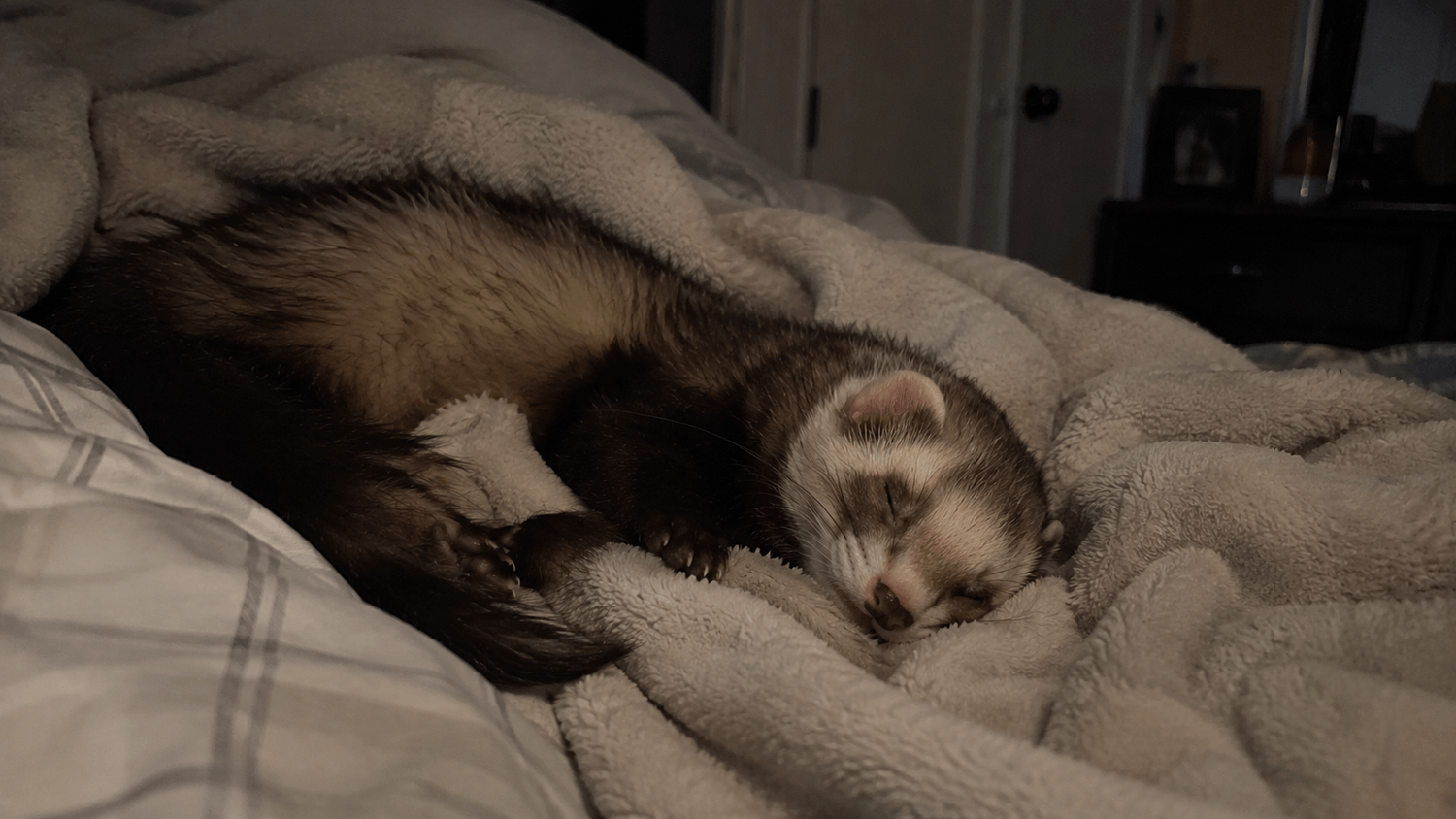
Dogs ■ Cats ■ Ferrets
One-time payment. No hidden charges. Instant access.
I reserve the right to end this introductory price at any time without warning.

Accepted payment methods
Want More Good Years With Your Pet?
Yes. More years with your pet. In a Belgian study that followed 500 dogs for five years, the ones fed real home-prepared food lived almost three years longer than the ones on the bag.
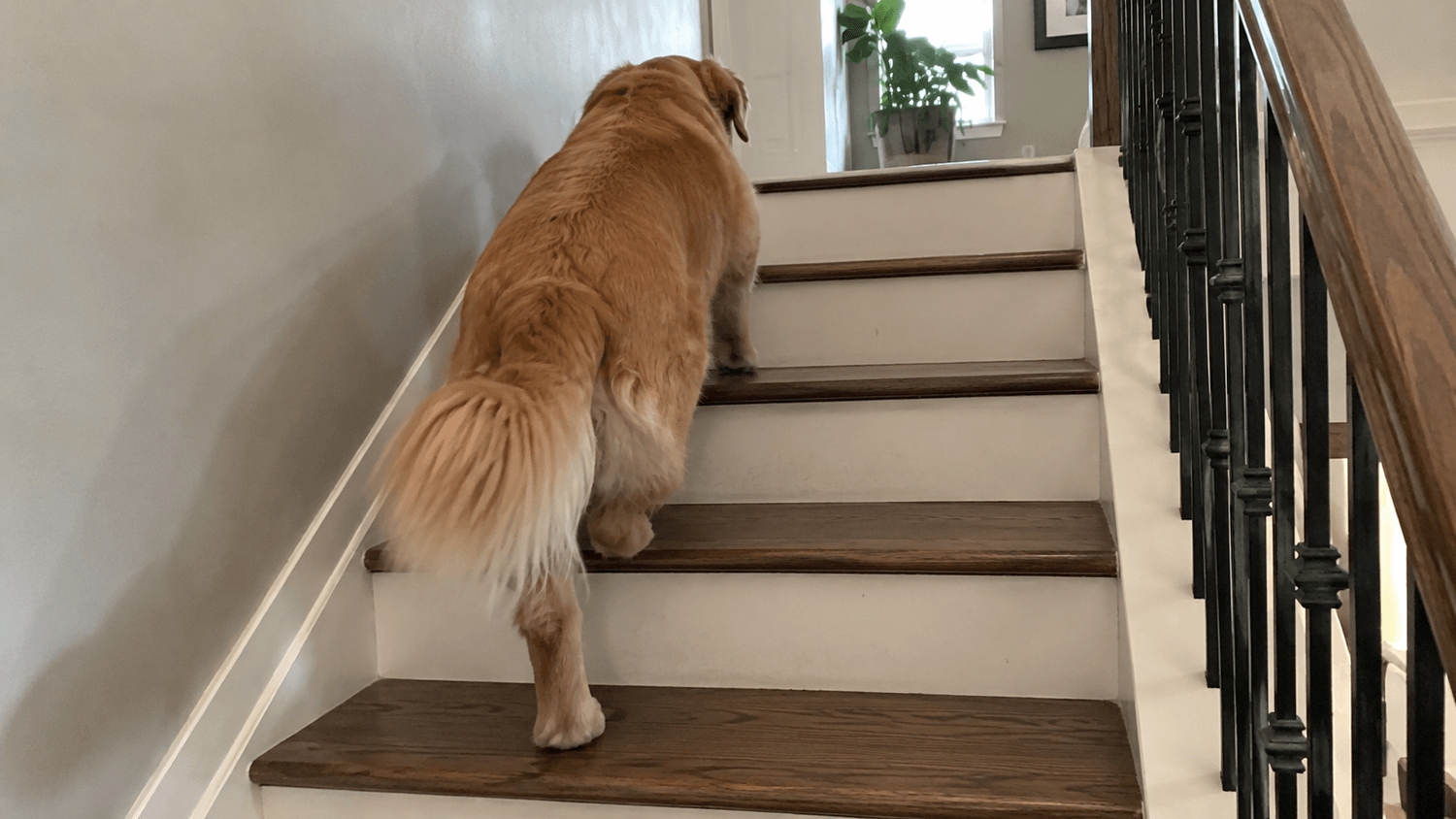
That's more mornings. More stairs taken at a run. More of the animal you actually brought home.
Lippert & Sapy, 2003. Home-prepared fresh diets averaged 13.1 years; industrially processed food averaged 10.4. An observational study, not a controlled trial.
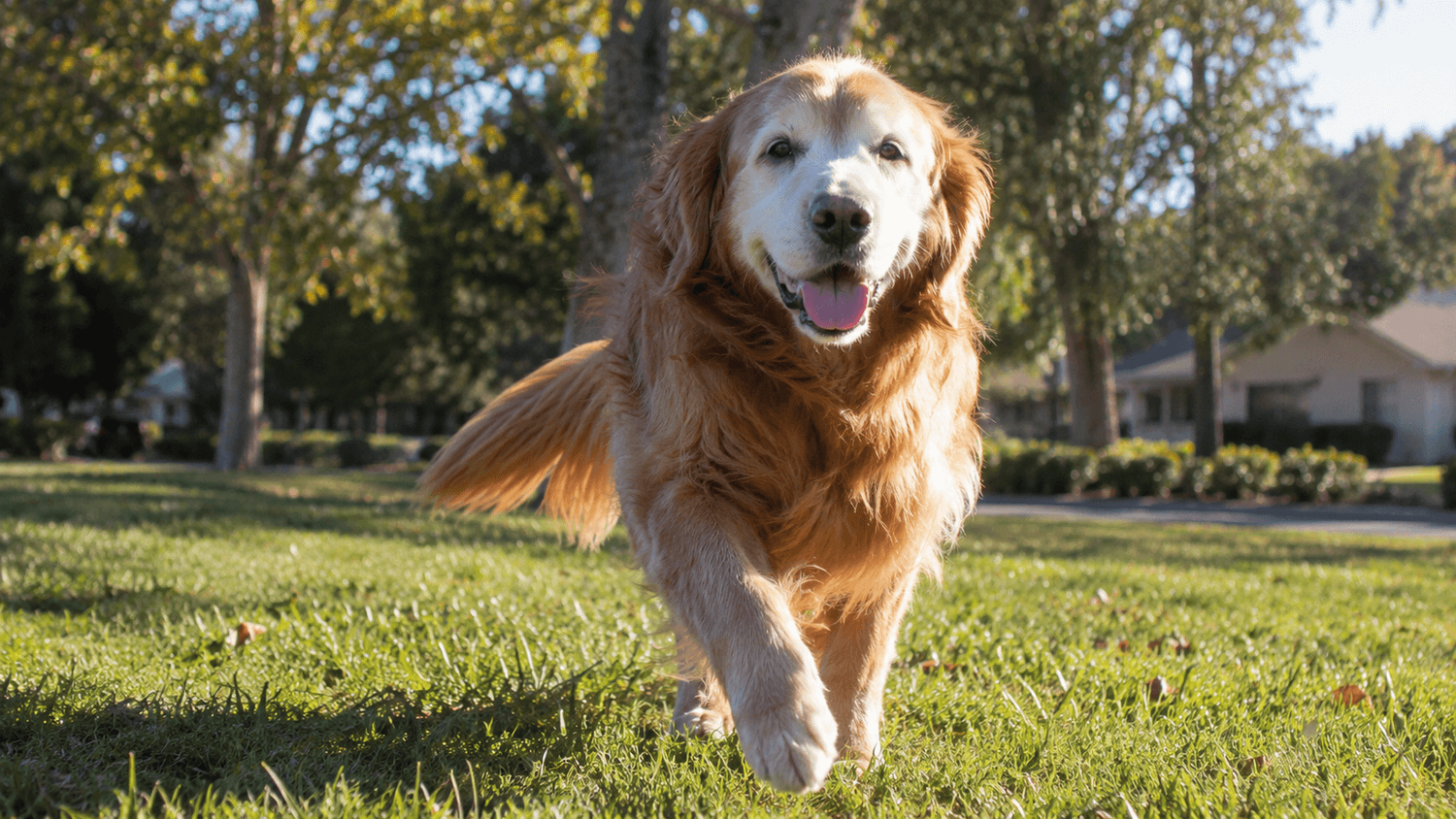

A Coat People Stop You About
Thick enough that somebody stops you at the park to ask what you feed them. And poops you pick up in one bag without making a face.

Quiet Nights
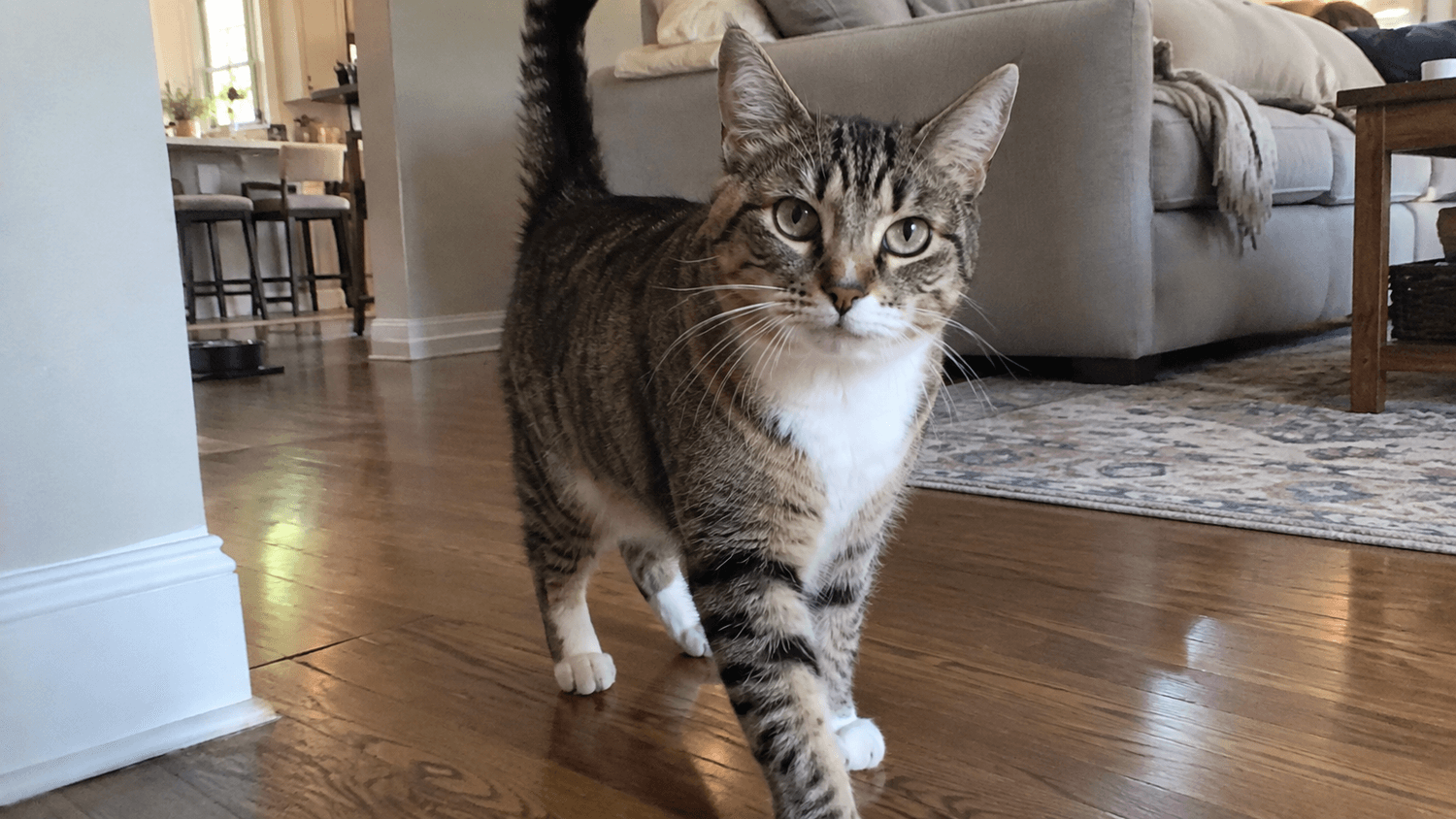
No licking at three in the morning. A cat who drinks like a normal cat again, and stops throwing up what everybody kept calling hairballs.
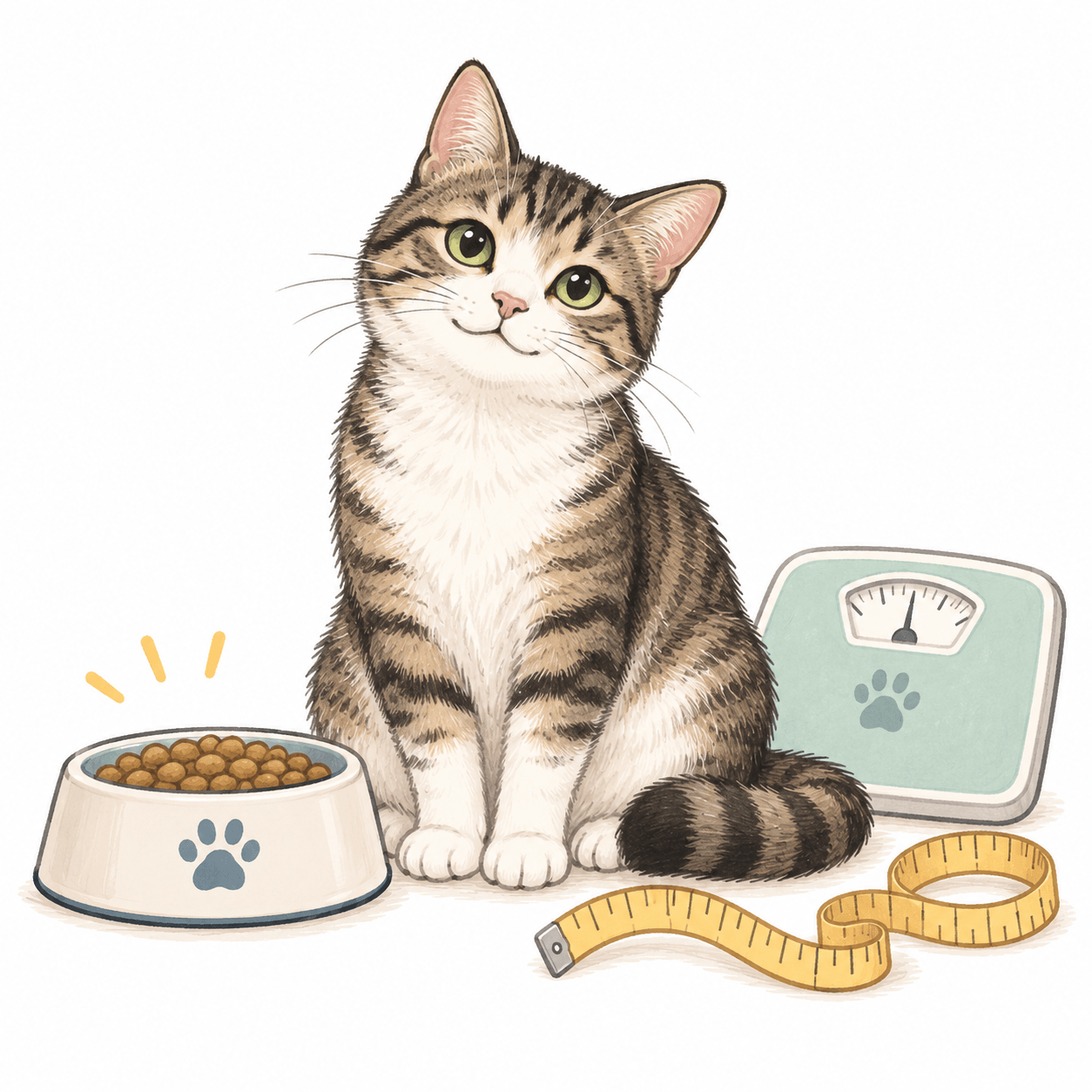
A Weight That Settles
Where it belongs. Without you cutting their portions and feeling cruel about it, because the problem was never how much.
You may have already noticed
Is Your Pet
Suffering In Silence?
Why does your dog lick that same paw? Over and over. Night after night. Even when there's nothing on it. Most people figure it's allergies. Or a habit. It's neither.
And if you live with a cat, you know a different version of the same thing. The throwing up that everybody calls hairballs. The patch of fur she's licked bare on her belly. The water bowl she's suddenly at all the time.
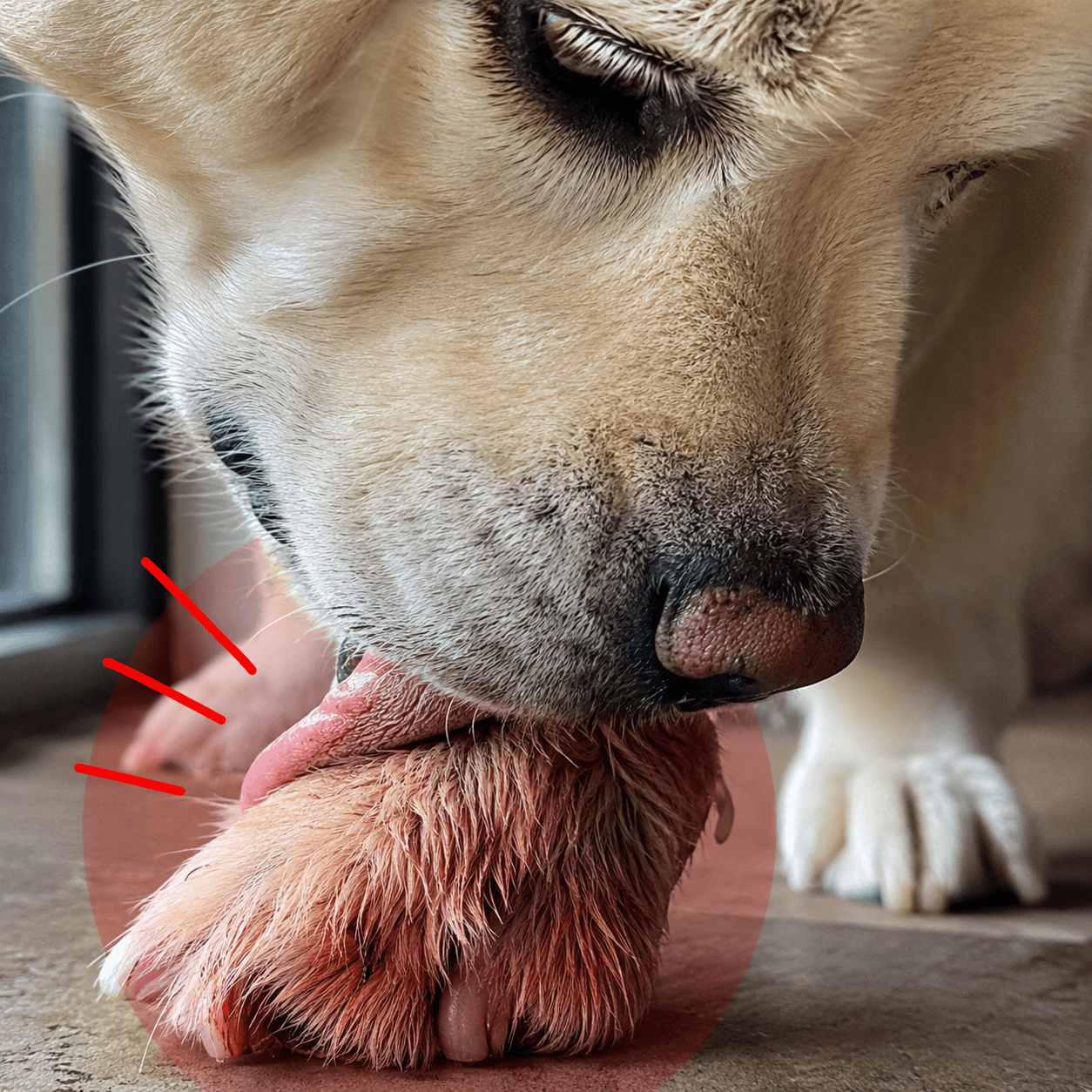
The Licking That Never Stops
Same paw. Night after night. Even when there's nothing on it. You've checked a hundred times.
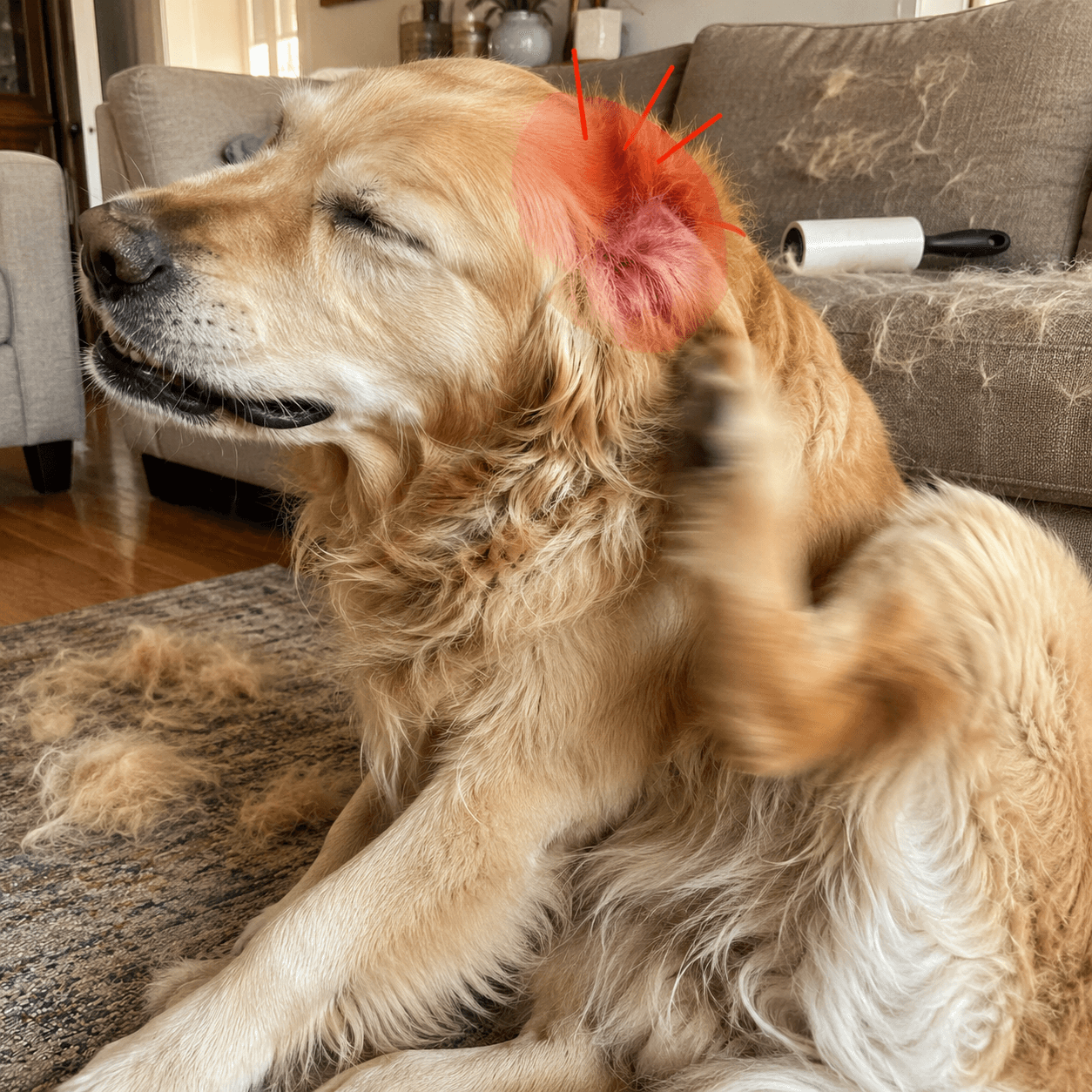
Scratching You Can Hear From The Next Room
The hind leg going at the neck, the whole body rocking with it. Somebody told you it's allergies.
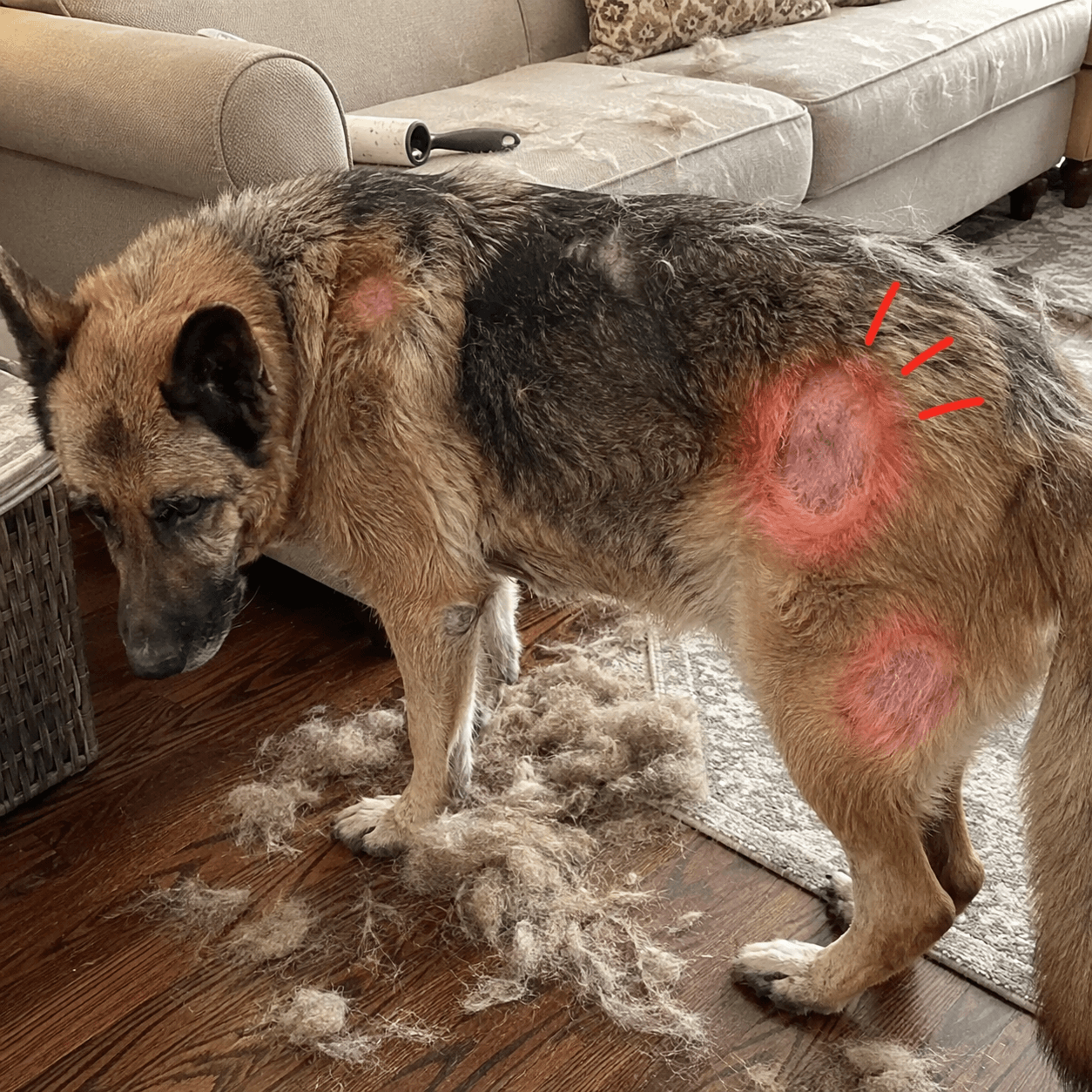
A Coat The Light Dies On
Flat. Dry at the tips. Thin in patches where it used to be thick. It happened so slowly nobody connected it to dinner.
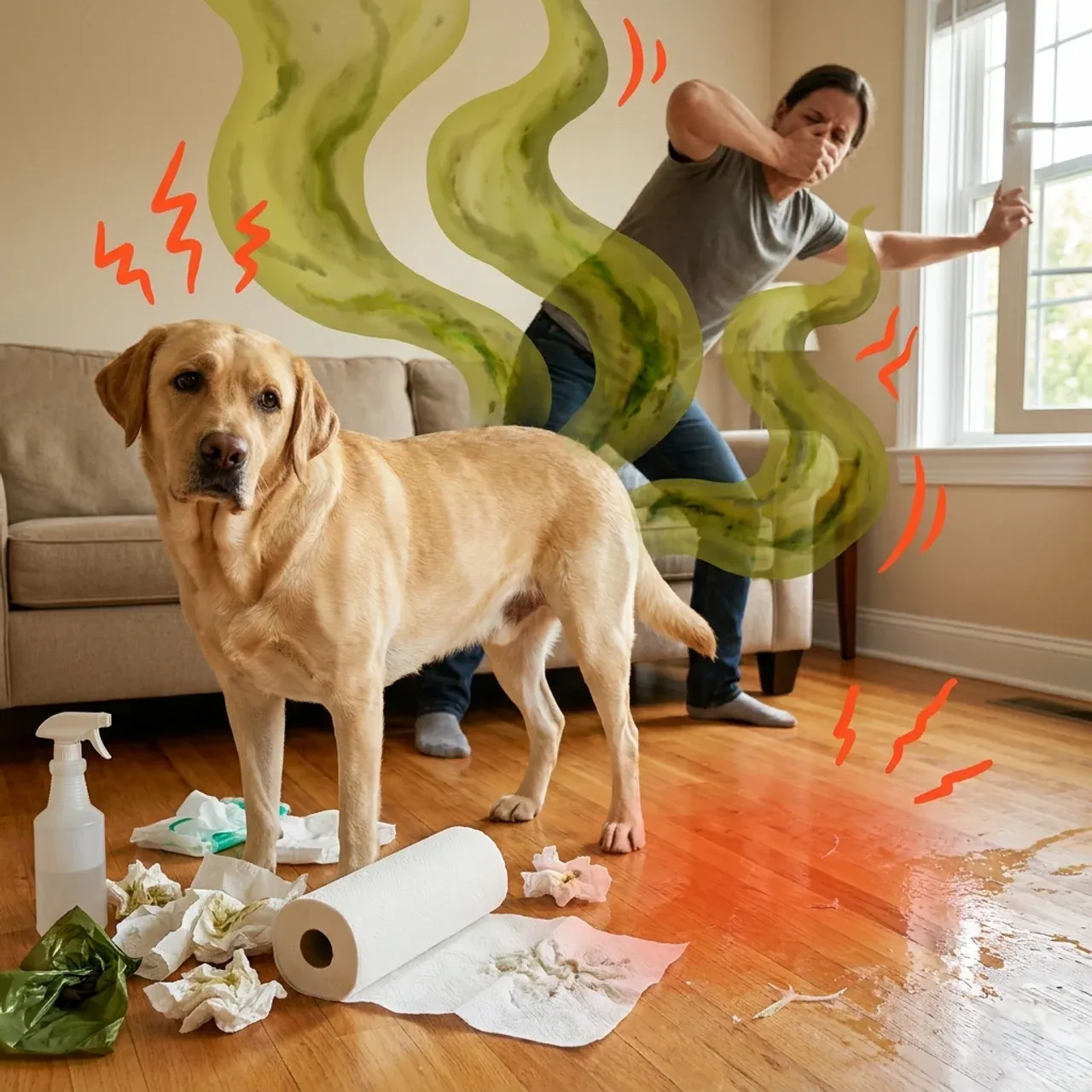
The Bag You Don't Want To Pick Up
Soft, loose, three trips a day. And the gas that clears a room, which everybody treats as a joke.
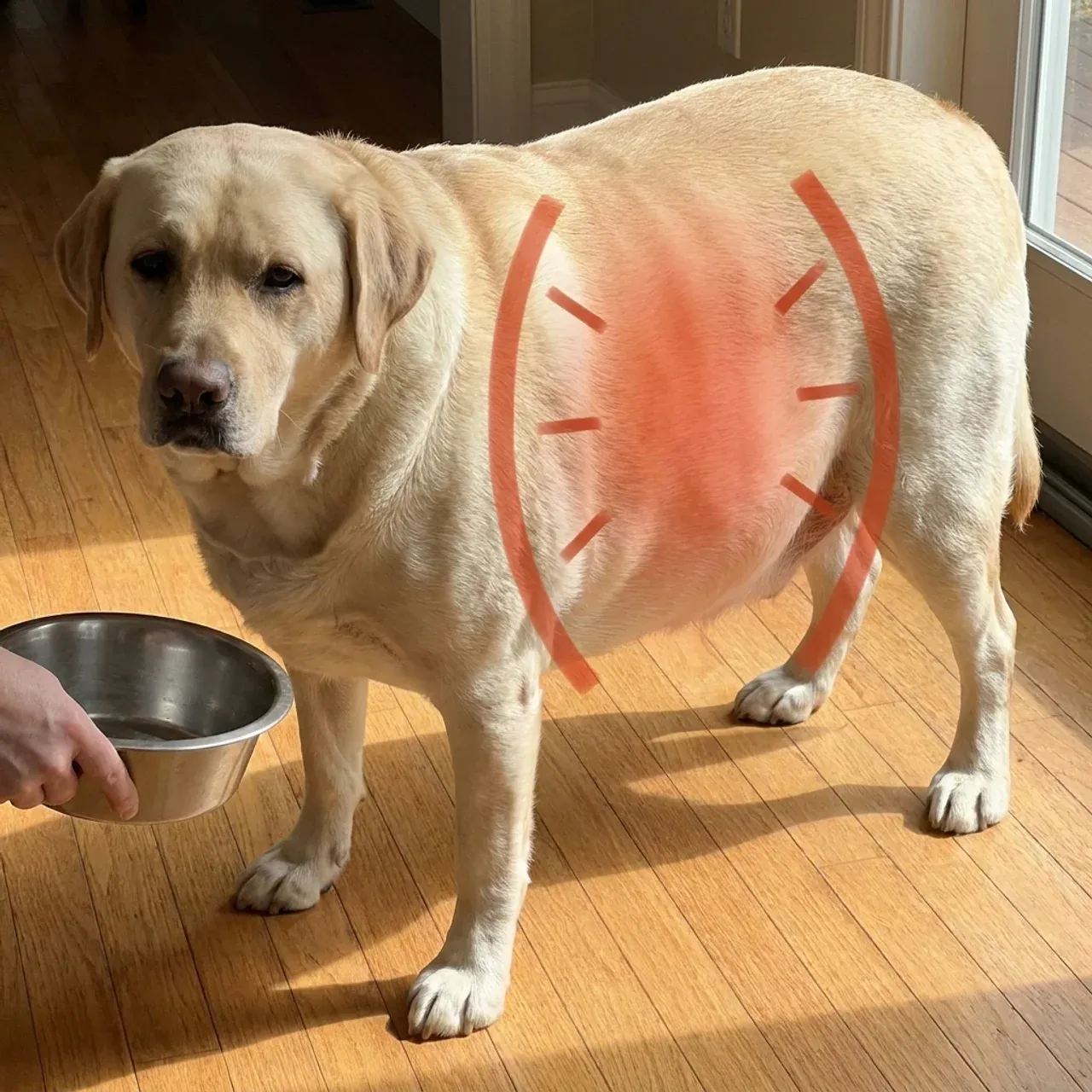
Weight That Won't Come Off
You've cut the portions. Twice. You feel cruel doing it and the waist still isn't there.
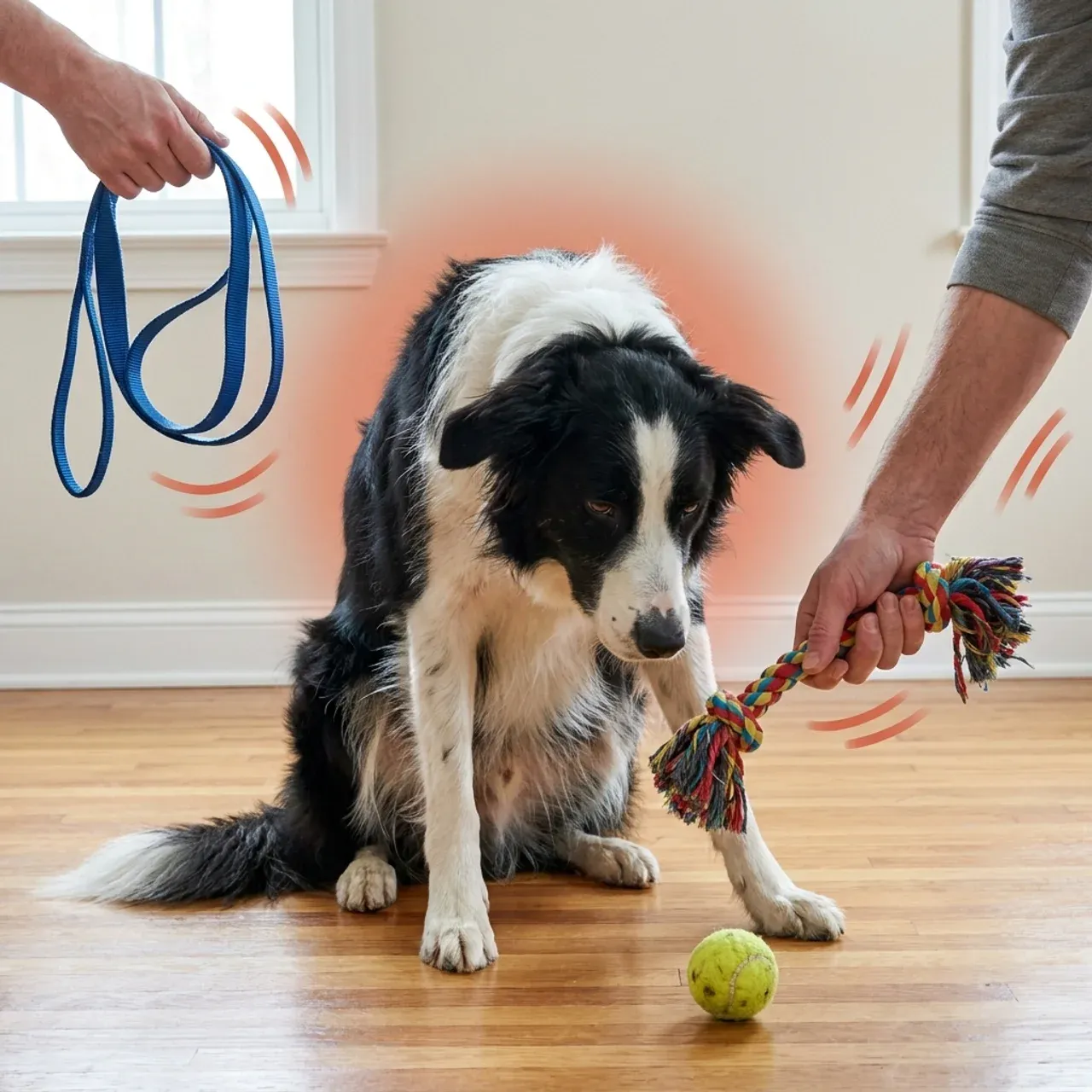
The Stairs They Stopped Taking
The ball rolls past and they watch it go. They get to the bottom of the stairs, look up, and wait.
The itching, the dull coat, the gas, the mushy poops, the weight that won't come off, the slowing down. Those aren't six different problems.They're one problem showing up in six places.
They can’t tell you something’s wrong.
So their body tells you instead.


Hey, it's Barbara Larson.
I live with a dog, a cat, and a ferret, and all three have eaten raw for seven years. Which are three of the hardest animals on the planet to feed this way. Three completely different bodies that need three completely different things.
That's the job.
Grab a pen if you've got one. There are four things in here you're going to want written down.
Most people won't go get the pen. Most people won't make it past the second paragraph of a page about pet food. You're still here. That tells me something about you.
The Pet Food Industry Would Rather You Never Turned The Bag Over.
The itching, the dull coat, the gas, the mushy poops, the vomiting, the weight that won't come off. Those aren't six different problems. They're one problem showing up in six places. They can't tell you something's wrong, so their body tells you instead.
And it's coming from the bowl. But not the way you think. Some of the worst offenders cost seventy dollars a bag.
The problem isn't the price. It's one step at the very end of the line, between the factory and the bag, that almost nobody knows about. It's completely legal, it's on every bag in the store, and once you see it you can't unsee it.
So let's look at that bag. Not the front. The front is an advertisement. Turn it over.
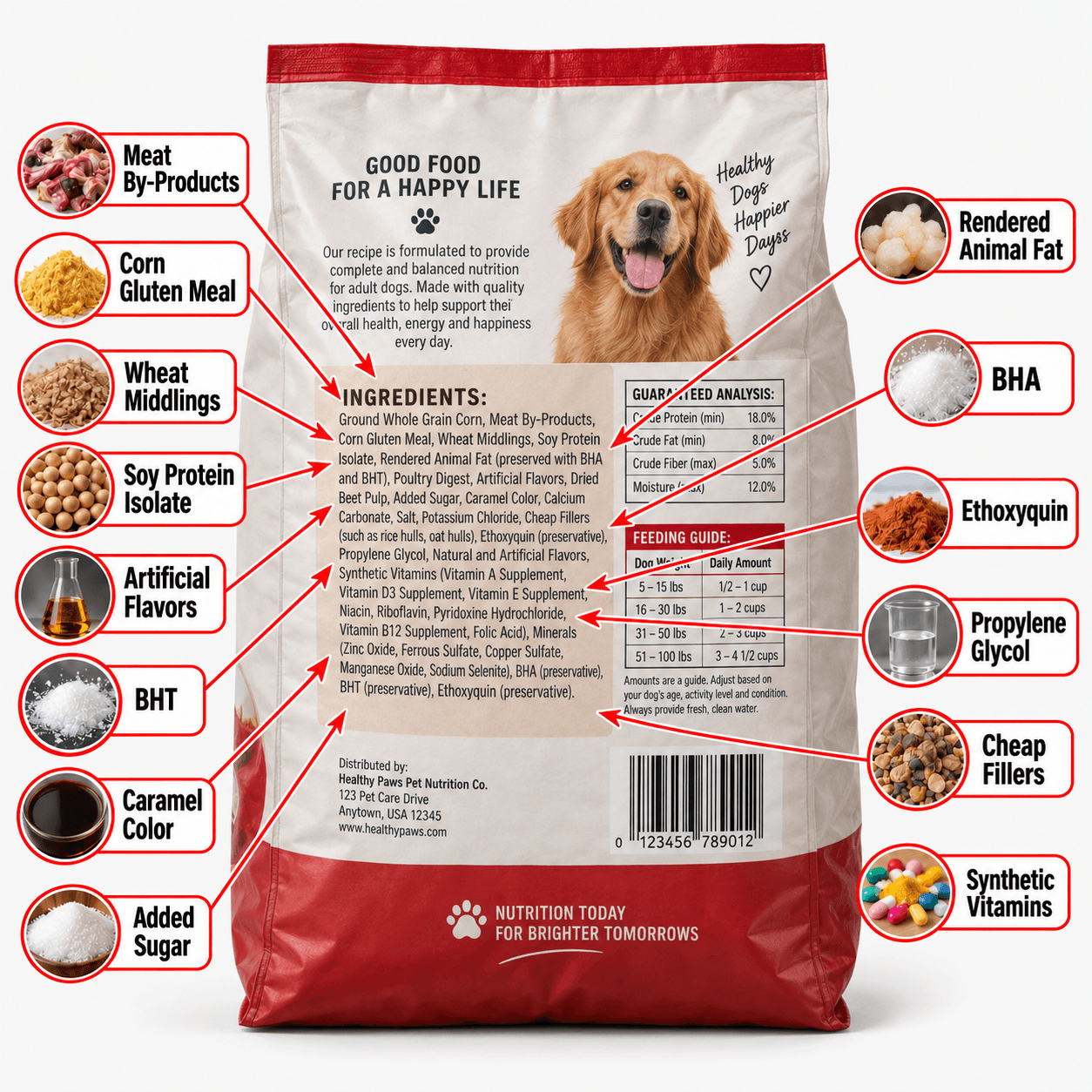
It starts as a slurry. Cheap protein meal, cheap starch, whatever was contract-priced that quarter. That goes into an extruder and gets cooked under pressure, at a temperature that would incinerate anything you'd put on your own plate. Then again, to dry it out, so it can sit in a warehouse eighteen months and still be legal to sell you.
Lie #1
"Real Meat"
Ingredients are listed by weight before cooking, and fresh chicken is seventy percent water. So it goes on the label heavy, cooks down to nothing, and still sits in the number one slot.
Meanwhile the corn, the wheat and the pea protein get split into separate lines so none of them outranks it. Add them back together and it's a plant-based food with meat flavoring.
Lie #2
"Complete"
You already know what hard cooking does to food. Heat destroys nutrients. That's not controversial.
Which leaves the manufacturer with a problem, because what comes out still has to hit a nutrition standard on paper. So they spray it back on. At the end of the line, after all the cooking, the pellets get coated with a synthetic vitamin premix. Out of a nozzle.
Complete on paper. Sprayed on in real life.
Lie #3
"Balanced"
This is the one that turned my stomach. Because there's a second spray. A palatant, which is their word for flavor spray. Rendered fat, so the thing tastes like food.
They spray flavor on because on its own, a dog won't touch it. That's not food with a coating. That's a coating with something underneath.
Real meat. Complete. Balanced. All three get manufactured in the last four feet of a factory, after the food part is over. I call it the paint-on label. The nutrition isn't in the food. It's painted onto the outside to hit a number on a chart.
One More Thing The Cooking Takes Out
Water. A mouse is about seventy-five percent water. Kibble is about ten.
A dog drinks to make up the difference. A cat mostly won't. She evolved in a desert, built to get her water from her food, not from a bowl. So a cat on dry food is running short on water almost all the time. For years.
That's why she's at the water bowl. And it's behind the throwing up too. A hairball is just hair that didn't move. On dry food there isn't enough water in the system to carry it the right direction, so it comes back up instead.
She's a desert predator eating dry cereal.
Ask your vet what chronic low water intake adds up to in a cat. That's her job, not mine. But ask her.
October 2, 2026 · Independent lab results
They Tested 100 Best‑Selling Cat Foods.
Lead Showed Up In 99% Of Them.
Everything I just showed you, I’ve been saying for seven years. This fall, a lab put numbers on it.

The Clean Label Project, a nonprofit that tests consumer products, bought 100 of the best-selling cat foods at regular stores. Wet, dry and freeze-dried, from 62 brands. No brand picked the products, and no brand saw the results before they went public. Then they tested every one for more than 120 contaminants.
Share of the 100 cat foods tested that contained each metal.
Not 99% of the cheap stuff. 99% of everything. The bags labeled natural. The premium ones. Remember the seventy-dollar bag?
The study’s author said cat owners pay more for premium meat and cleaner labels because they assume it buys healthier food. Then she said it straight: “That’s not necessarily the case.”
And The Details Line Up With That Label
- Dry food carried about three times the lead of wet or air-dried food. The same dry food that keeps your cat short on water. And the kidneys are the organ that filters heavy metals out. Kidney disease is one of the most common causes of death in older cats.
- The weed killer followed the plants. Glyphosate showed up in 37% of the foods, and the more plants in the first ten ingredients, the more of it. Five plant ingredients meant nearly four times as much. A cat is a carnivore. Somebody put those plants in.
- Fish-based foods had about 18 times the mercury. Wet seafood had nearly 28 times as much as wet food made with other meats. That ocean flavor she begs for.
- The front of the bag didn’t tell the truth either. In more than a third of the products, the first ingredient on the label didn’t tell the full story of what was in the food.
Got a dog? Don’t relax yet. The same nonprofit tested dog food in February and found three to thirteen times more heavy metals than in human food. Lead and cadmium have been linked to cancer in dogs, and cancer is one of the leading causes of death in dogs.
To be fair, they tested one batch of each product, and the report doesn’t claim any single bag will make your pet sick. The trade group for the manufacturers says their food is safe and tightly controlled. Put that next to 99% and decide for yourself.
One honest thing. No food is zero. Metals are in soil and water, so they’re in meat too. What builds up is the same food, every day, for years. That’s the part you control, starting the day you make the bowl yourself.
And that’s only what’s getting into the bowl. Here’s what the bowl does once it’s inside.
Sources: Clean Label Project cat food study, released October 2, 2026, and its dog food study, February 2026.
Now the part that isn’t printed anywhere
See What Kibble Is Doing
Inside Your Pet
You’ve been looking at the outside of him. This is the inside. And no, it isn’t age.
- SKIN & COAT — He isn’t allergic. The fat that builds skin burns off inside the extruder.
- TEETH — The crunch scrubs nothing. He’s rotting quietly, and most dogs start by three.
- HEART — Heat destroys taurine. Cats died of it before anybody worked out why.
- KIDNEYS — Prey is 70% water. Kibble is 10%. She has been running dry for years.
- BLOOD SUGAR — No carb line on that bag. They don’t have to print what it’s mostly made of.
- GUT — A carnivore cannot use starch. It walks straight through him. That’s the third walk.
- JOINTS — Purina proved it: the lean ones lived 1.8 years longer. The bowl decides which he is.
- WEIGHT — You cut the portions. Twice. You cannot fix a starch problem with less starch.
I fed that bowl for seven years.
I know all eight from the inside.
Here's The Part
I Don't Like Telling.
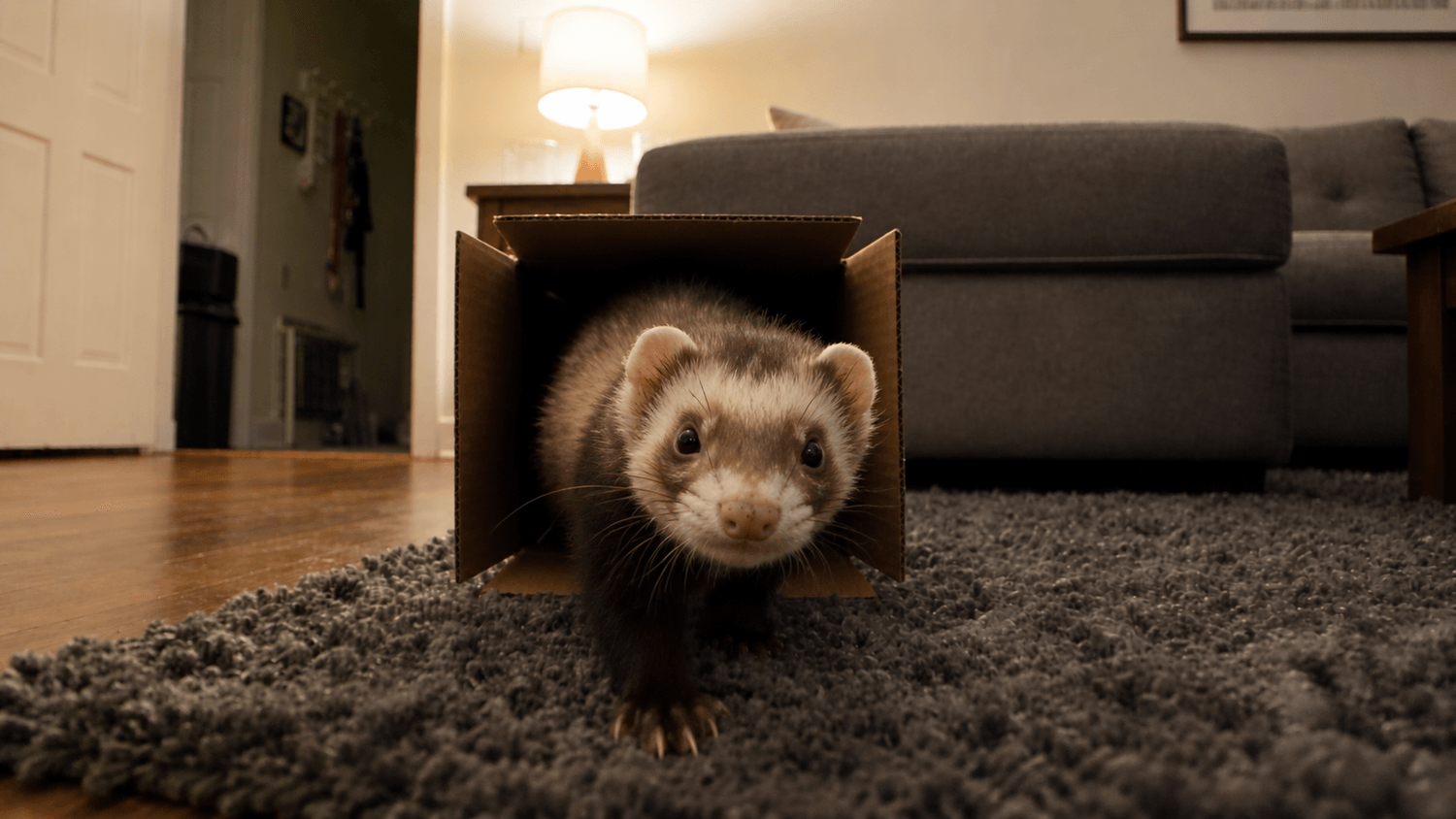
I had a ferret at home. His name was Firo, and he was the funniest little guy I've ever lived with.
And Firo died young. Way too young.
He'd eaten dry ferret food his whole life. That's what you buy. It's what's on the shelf, and it never occurred to me to question it.
After I lost him I got the bag out of the cupboard and actually read it. First time. Ever.
By-products. Refined carbs. Cheap preservatives. And a vitamin mix sprayed on the outside.
And I sat down on my kitchen floor with that bag in my hands, and I understood I'd been feeding him something painted to look like food. Twice a day. His whole short life. Loving him completely. And starving him the entire time.
So I went to go do it properly, and I ran into the same wall you've probably hit.
Wall one is kibble. Wall two is the delivery services, which is better food at four hundred a month, forever. And wall three is the one that stops almost everybody. Doing it yourself.
Let me do the math on wall three, because nobody ever does. Three weeks of videos. Four calculators giving four different numbers for the same dog. Two threads contradicting each other about bone. Somewhere in there you hit the calcium-to-phosphorus ratio and your stomach drops.
And then it's eleven at night, fourteen tabs open, and you have the thought that ends it.
"What if I get it wrong and I hurt him."
You close the laptop. And in the morning you buy the same bag.
Three weeks. Zero meals.
And I need you to hear this next part, because I think you've been carrying it around.
That's not laziness. That's you caring so much that being scared of hurting them got bigger than hoping you could help them.
I know. I sat right there for a year.
The four things and the ratio
Here's What A Balanced Bowl
Actually Needs
You don't have to do the studying. I did it. Somebody does the math once and writes it down. Painted on, or built in. That's the whole choice. You can't spray a bowl into balance. You have to build it.
Component #1
Muscle Meat — The Engine
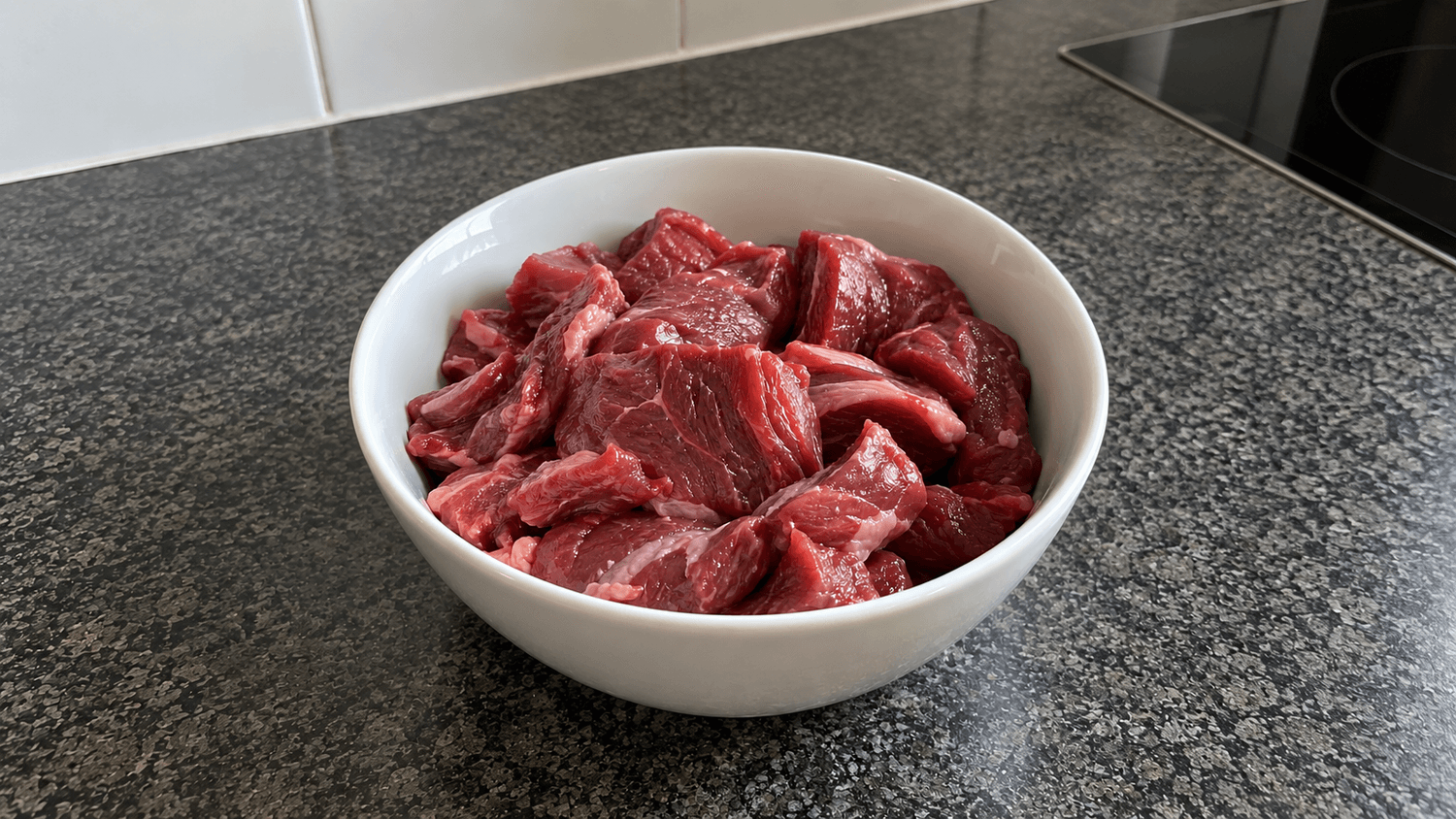
What most bowls get wrong: they're built around a filler and the meat is an afterthought.
What that costs you: here's the bit that reframes everything. Dogs have no biological requirement for carbohydrate. None. A cat has even less business with it. Most kibble is a large share carbohydrate by weight. Hold that against the weight that won't come off no matter how much you cut their portions. You've been cutting the amount. Nobody told you to look at what the thing is made of.
What the right bowl does: protein and fat, which is what a carnivore actually runs on.
Component #2
Raw Meaty Bone — The Calcium
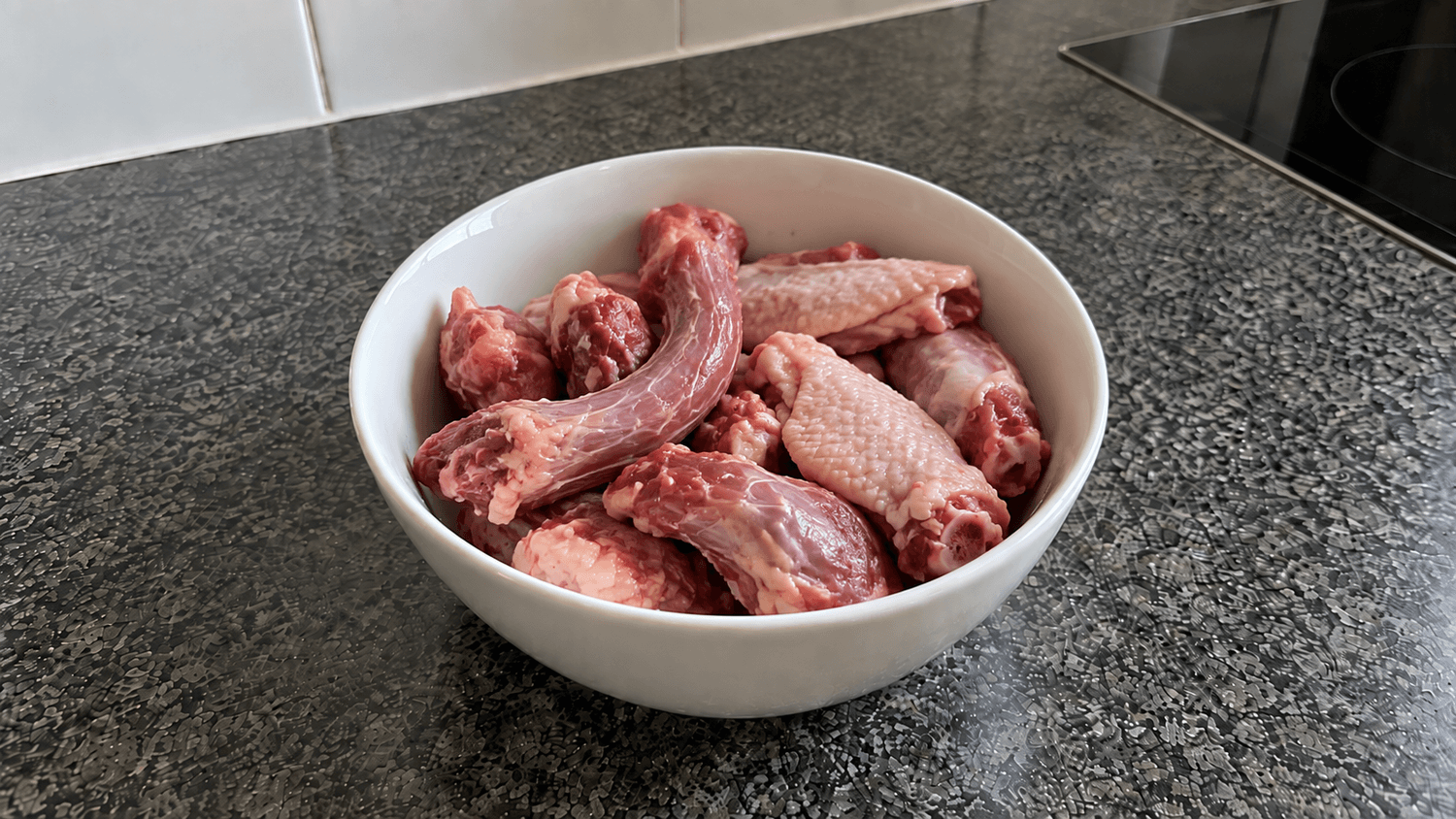
What most bowls get wrong: they use a calcium powder, or they skip calcium entirely and hope.
What that costs you: do me a favor. Later, look in their mouth. Every tooth is a cone or a blade. Not one flat grinding molar in a dog's head, and even fewer in a cat's. Built to crack things open, and it's been eating pellets it can't chew.
What the right bowl does: calcium comes from bone. Not a powder. Bone. And bone is also what firms up the stool. Not a side effect. The mechanism.
Component #3
Liver — The One Everybody Skips
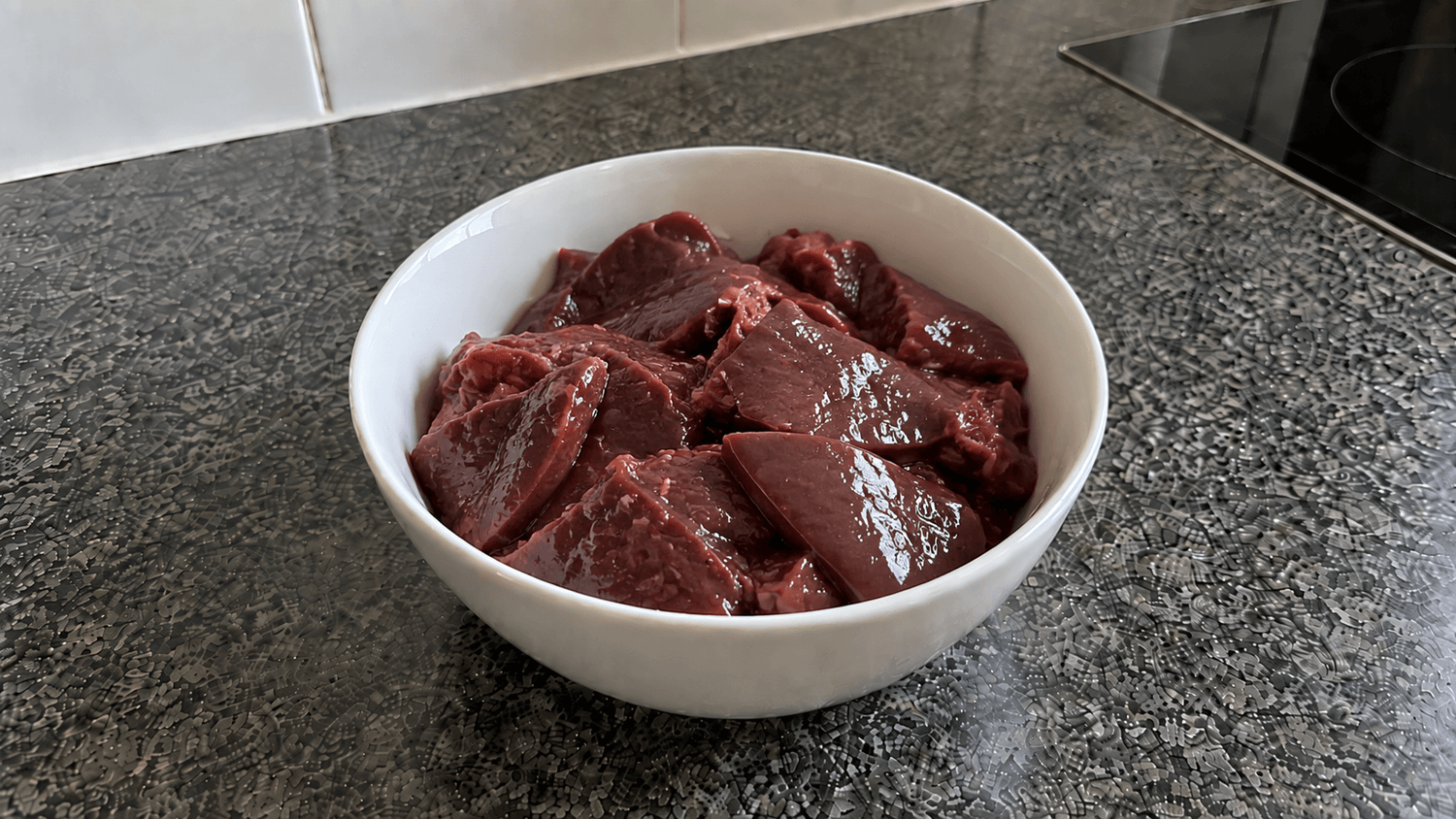
What most bowls get wrong: liver feels weird to buy, so it doesn't get bought.
What that costs you: copper is what colors the coat. Literally, it's what the pigment is built from. Run short and the shine goes flat, so slowly that nobody connects it to dinner.
What the right bowl does: in the wild the organs go first. There's a pecking order built around the most valuable thing on the kill. Ruminant liver carries several times the copper of chicken liver. Four percent of the bowl.
Component #4
Secreting Organs — Kidney & Spleen
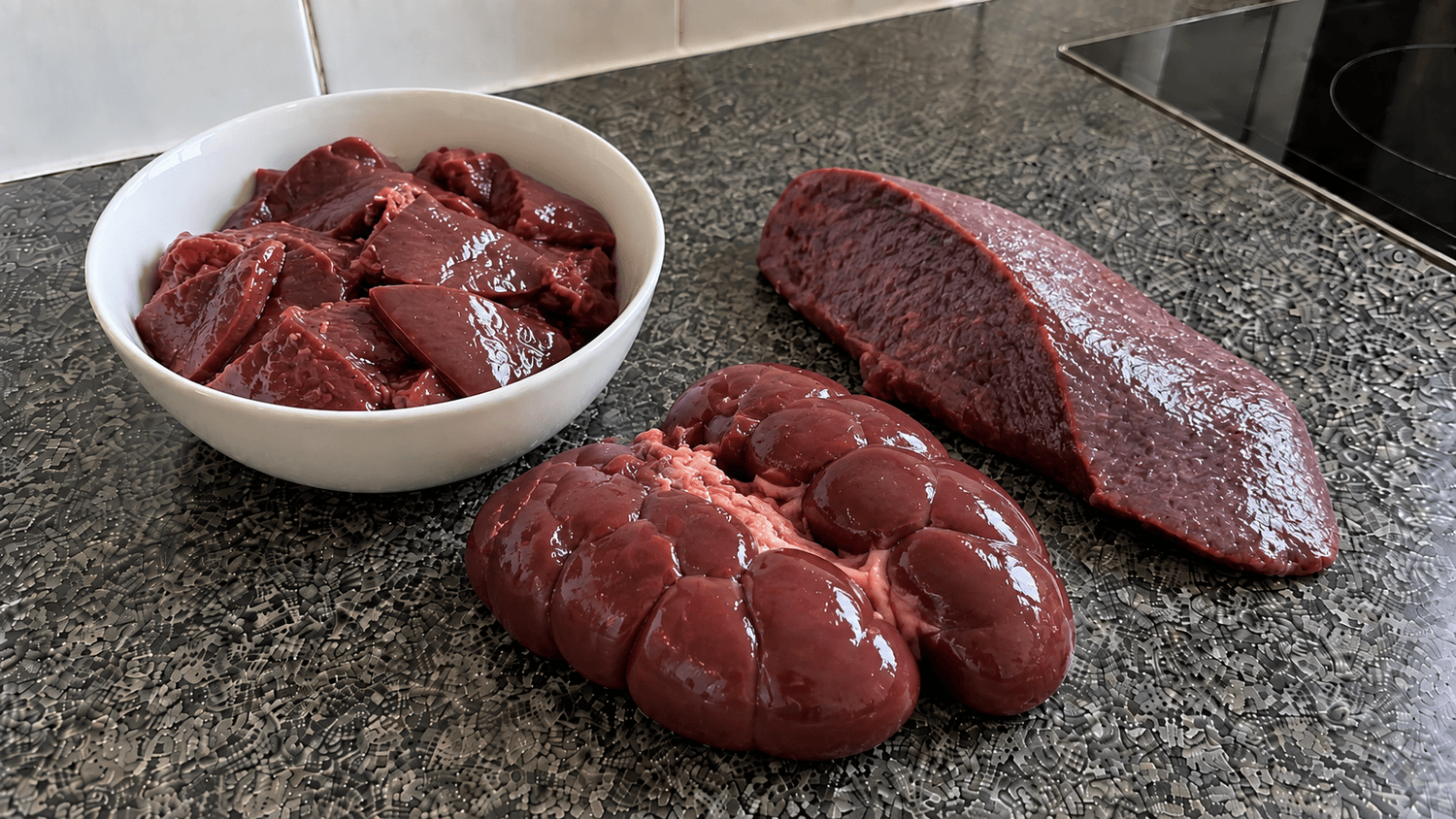
What most bowls get wrong: and write this down, because the internet gets it wrong constantly. Heart is not a secreting organ. Heart is a muscular organ, and it rides with component one.
What that costs you: if you count heart as your organ portion, you never actually fed one.
What the right bowl does: kidney and spleen, the ones almost nobody feeds. And heart in its right place, because heart is where taurine comes from. For a dog that's helpful. For a cat it isn't optional. She can't make her own.
Component #5
One Protein At A Time
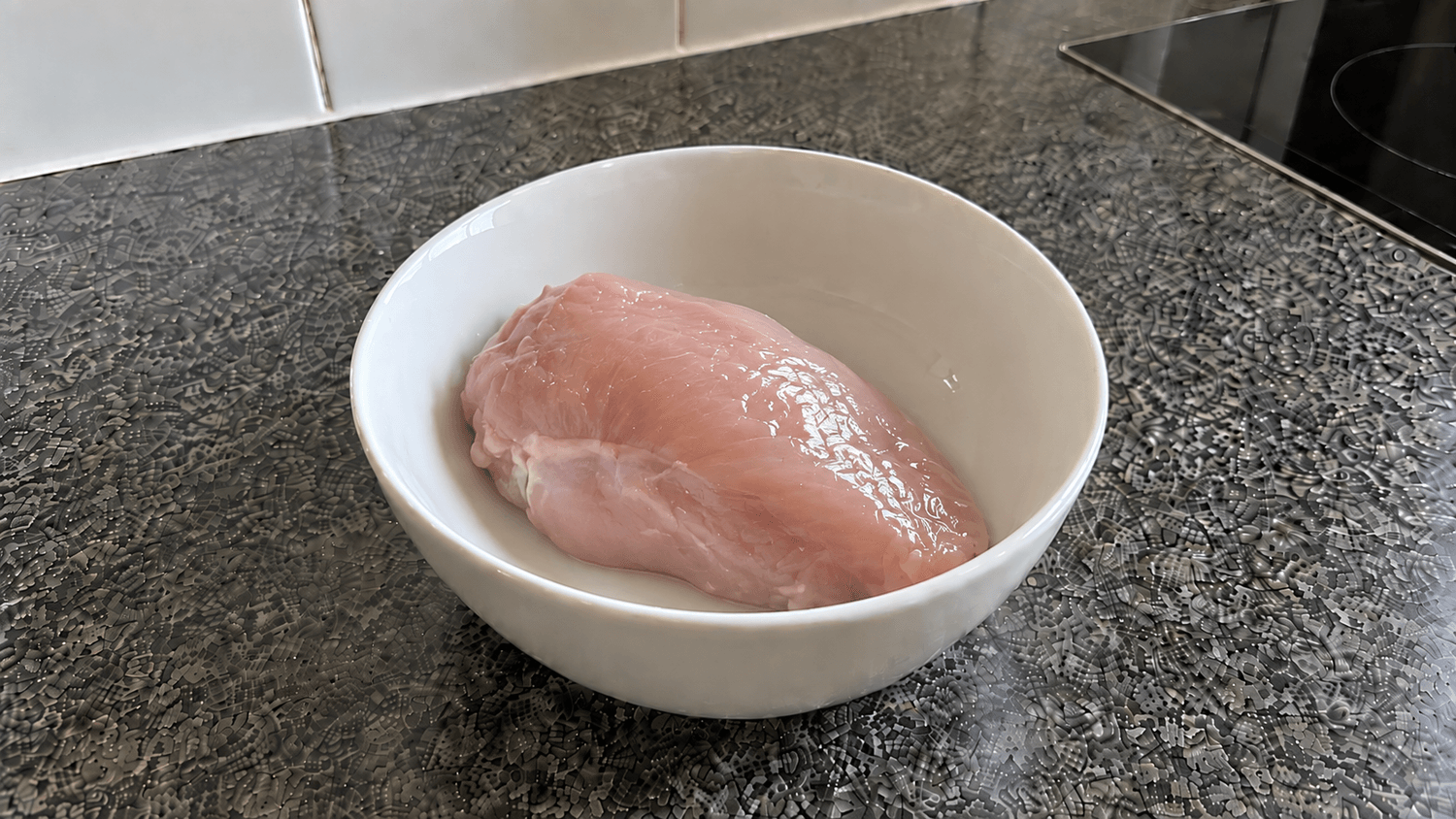
What most bowls get wrong: out of a bag they eat eight to thirty ingredients at once, every meal, for years.
What that costs you: if one of them doesn't agree with them, you'll never find out which. This is why I opened this page with a paw.
What the right bowl does: the method feeds one protein at a time, on purpose. I'm not promising the licking stops. I'm telling you you'll finally be able to look.
And this is why the ratio isn't one number. A dog and a cat don't get the same bowl. The cat runs a third leaner on bone and heavier on meat, because she's an obligate carnivore. Not just able to live on meat. Unable to live on anything else. Same four components, different proportions. It's why most cat owners end up feeding their cat a dog recipe without ever knowing it.
So the math isn't a skill you have to go get. It's a number somebody solves once and writes down. I solved it seven years ago and fed my own three off it every day since.
You don't calculate. You assemble.
Those numbers came out of seven years of bowls, across three species, on my own counter.
And then it collapses into something you do on a Sunday. Two hours, once a month, one freezer shelf. Then every morning it's three minutes and you go make your coffee.
The same eight, going the other way
See What Raw Food
Gives Back
These don’t all arrive together. Some you’ll see inside a week. Some take a season. That gap is where most people give up.
- SKIN & COAT — Fat that was never cooked twice. The licking stops before the shine.
- TEETH — Raw bone cut tartar seventy percent in twelve days. Somebody measured it.
- HEART — Taurine that sits in the meat, not sprayed on the outside of it.
- KIDNEYS — Seventy percent moisture. She takes in water she was never going to drink.
- BLOOD SUGAR — Meat, bone, organ, fat. There is nothing left in there to take out.
- GUT — Smaller, firmer, fewer trips. Usually inside ten days.
- JOINTS — You are not undoing arthritis. You are taking the load off it.
- WEIGHT — Ribs before waist. And the bowl usually gets bigger, not smaller.
None of that is a miracle.
It’s food that was never a coating.
The Two Things Stopping You
1. Bones.
I know what happened in your chest when I said raw meaty bone, because it happened in mine.
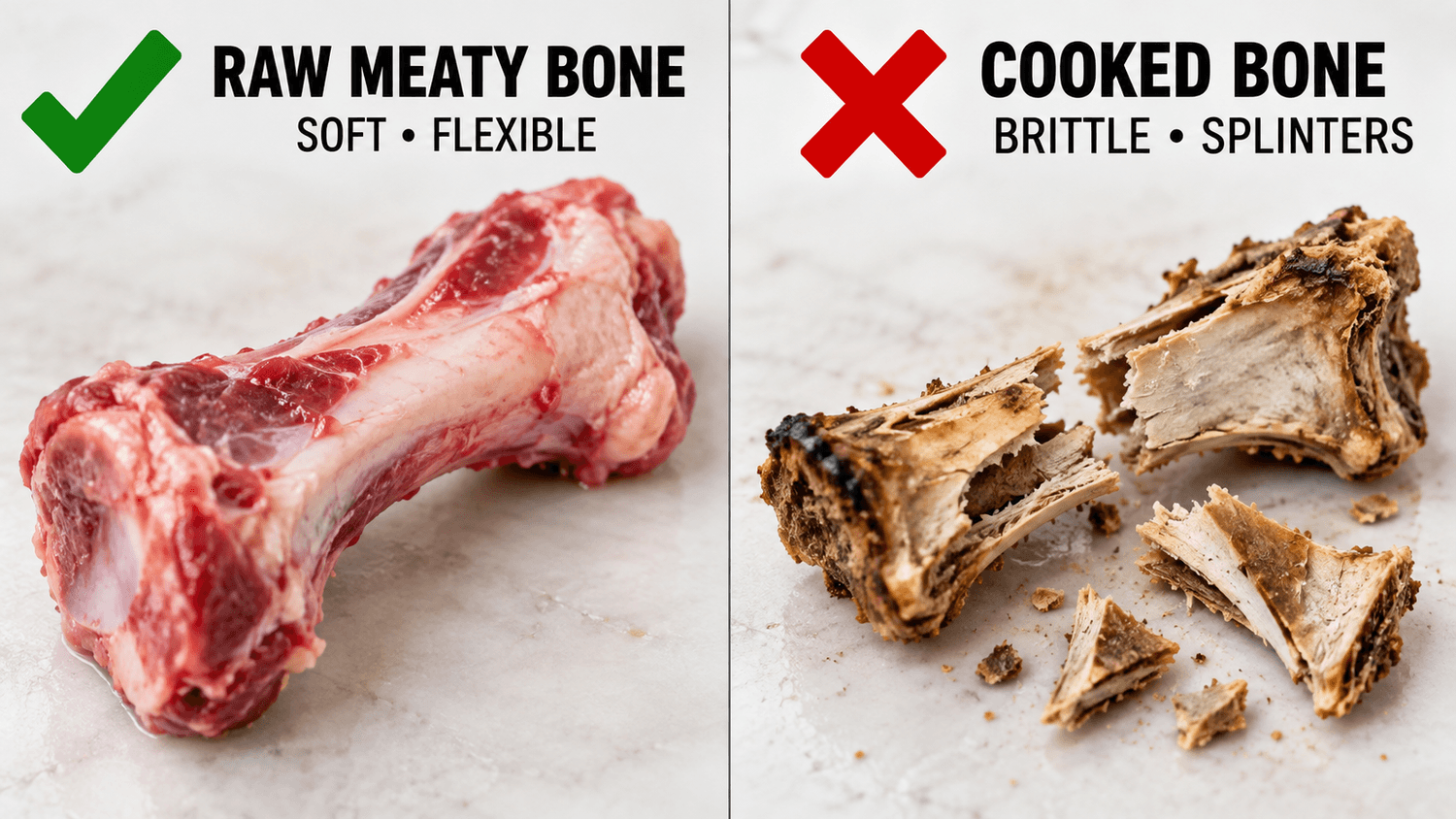
Everybody's heard it: bones splinter. And cooked bones do. Cooked bone goes brittle, shatters into shards, and it is genuinely dangerous. Never feed it.
Raw bone is a different material. It's soft. It bends. Those two got collapsed into one warning, and that warning has kept more good pet parents on kibble than anything else in this industry.
Which parts are safe and which you never touch is one page. It goes on the fridge.
2. Bacteria. "Will I make my family sick?"
You handle it exactly like the raw human food that it is. Frozen, thawed in the fridge, clean surface, wash up after.
Same routine you already use for the chicken you cook on a Tuesday. Nobody had to teach you that.
If you're sitting there going okay, I'm in, just tell me where to get it, the button is right here.
One time. 60 days to change your mind, and you've got me the whole way.
If you're not there yet, stay with me. Let me show you what happened when I ran this on the toughest case I could find.
How Do I Know This Works?
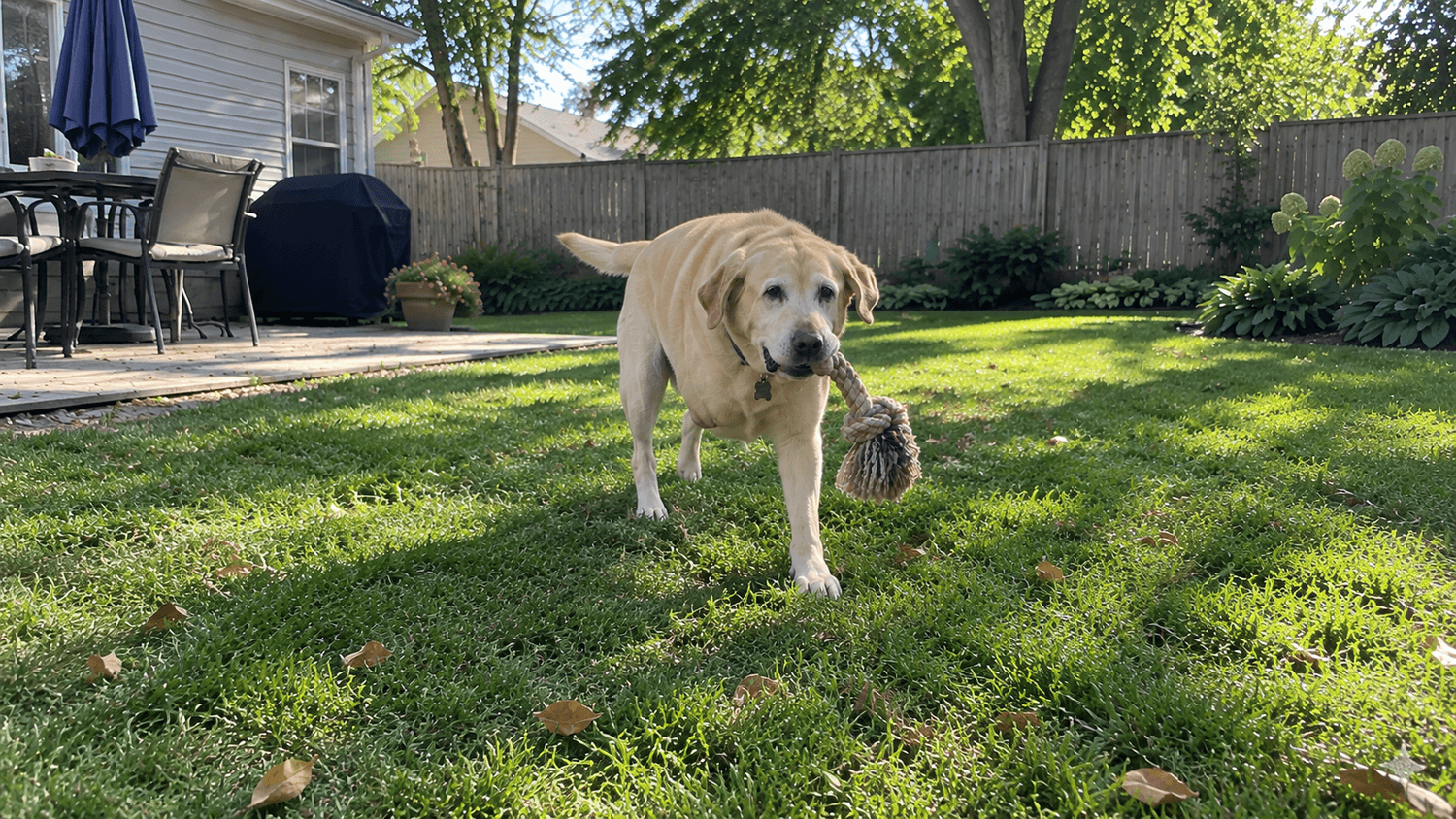
Years ago I worked the front desk at a doggy daycare. One morning a woman brings in a thirteen-year-old Lab. Three legs, missing a front one.
She hands over his feeding sheet and it isn't a scoop of anything. Real raw meat. Bones. Organs.
Call him Jake. Thirteen, three legs, and the best coat in the building. While I've got four-year-olds in that same room, half his age, dull and itchy and tired.
And then it hit me, and it was so simple it was almost insulting.
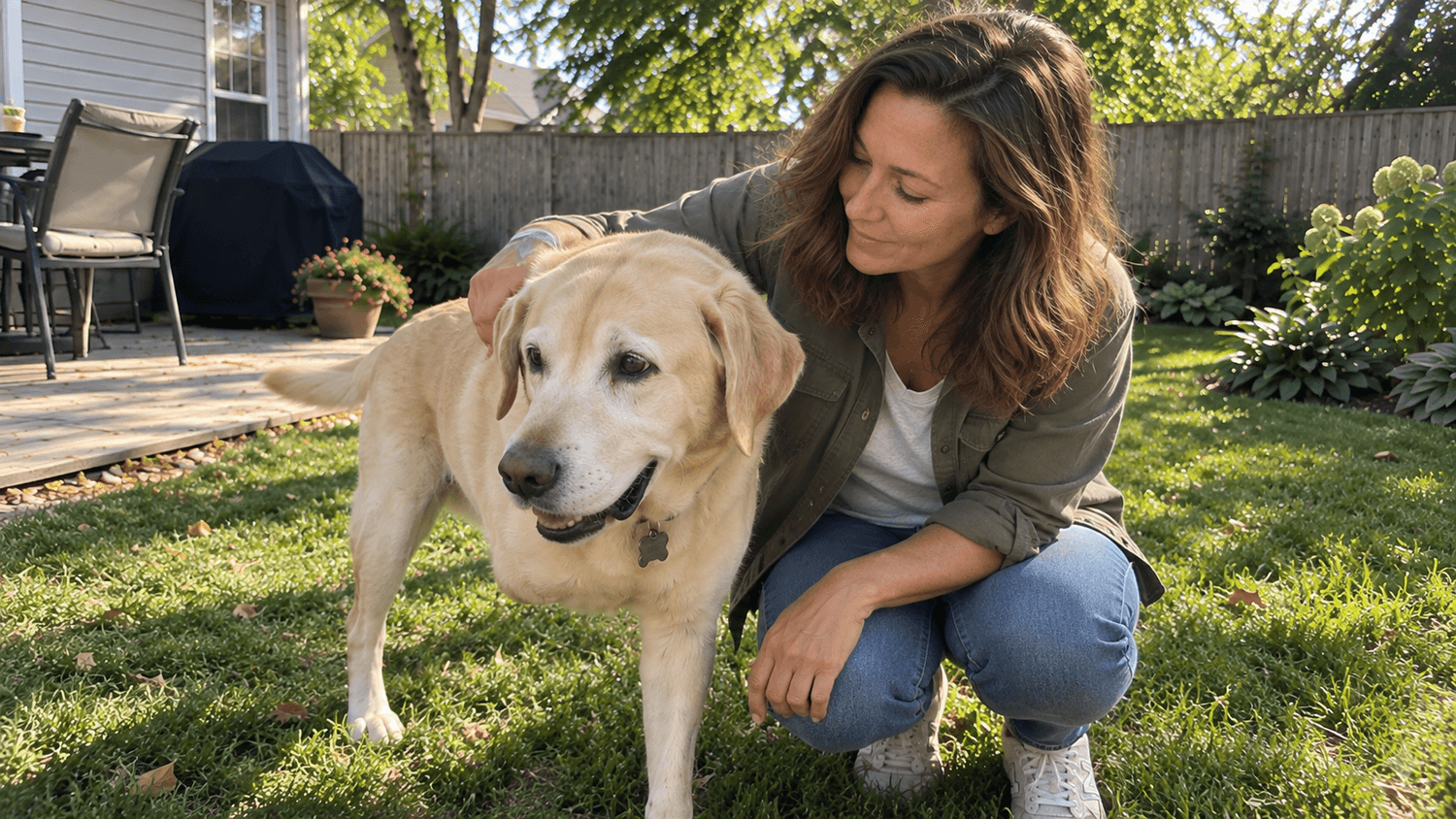
It was the food. Every other dog in that building was eating the pellet. Jake was eating what a dog is built to eat.
He lived to 19.
And what I'm telling you isn't just what I learned with my own three. It's years of study. The ratios, the nutrient tables, the research nobody reads. And thousands of other pet parents I've walked through this, on their own kitchen counters, with their own dogs and their own cats.
I know this works. I've watched it work.
Jake ate what a dog is built to eat.
And he lived to 19.
The toughest case I could find
Sandy Was Ten And Waiting
At The Bottom Of The Stairs
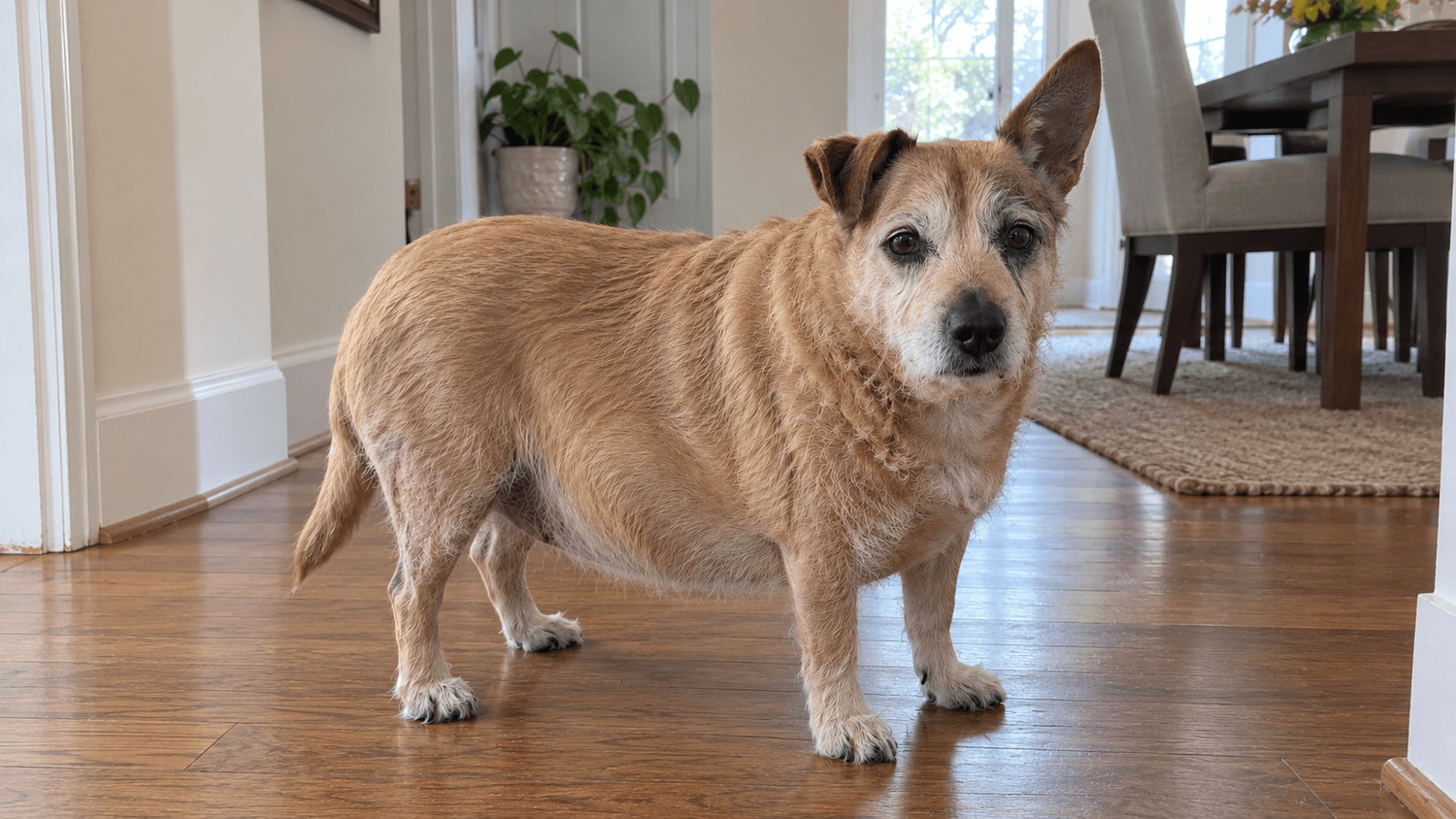
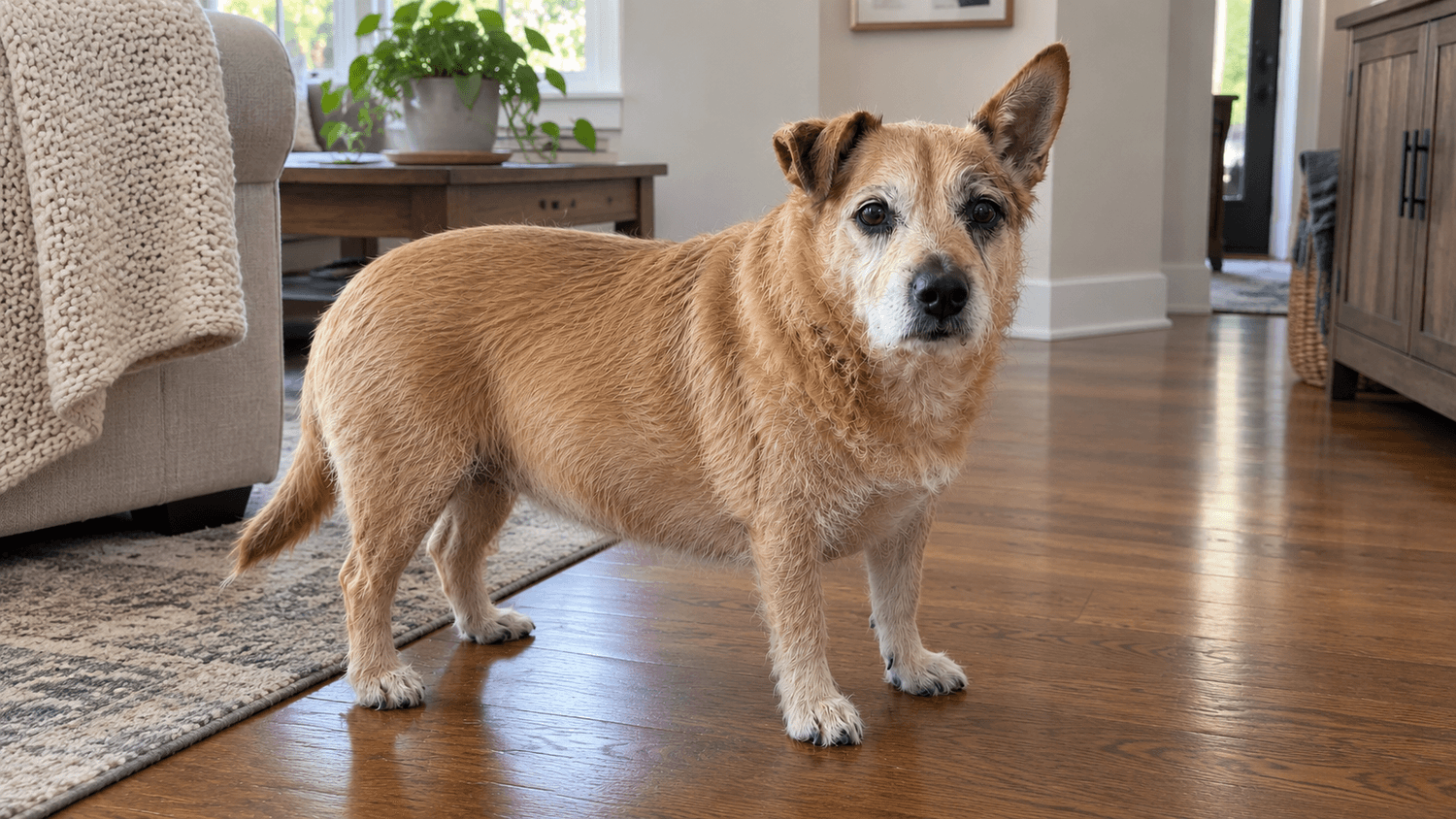
My grandfather's got a terrier mix. Sandy. Ten years old, free-fed dry food his whole life. Overweight, losing hair on his back legs, skin flaring up.
And he'd quit on the stairs. He'd get to the bottom, look up, and wait to be carried.
I picked him on purpose. If this only works on young healthy dogs, what's it worth?
Day one called for a lean white meat. He inhaled it. Week two, fully switched.
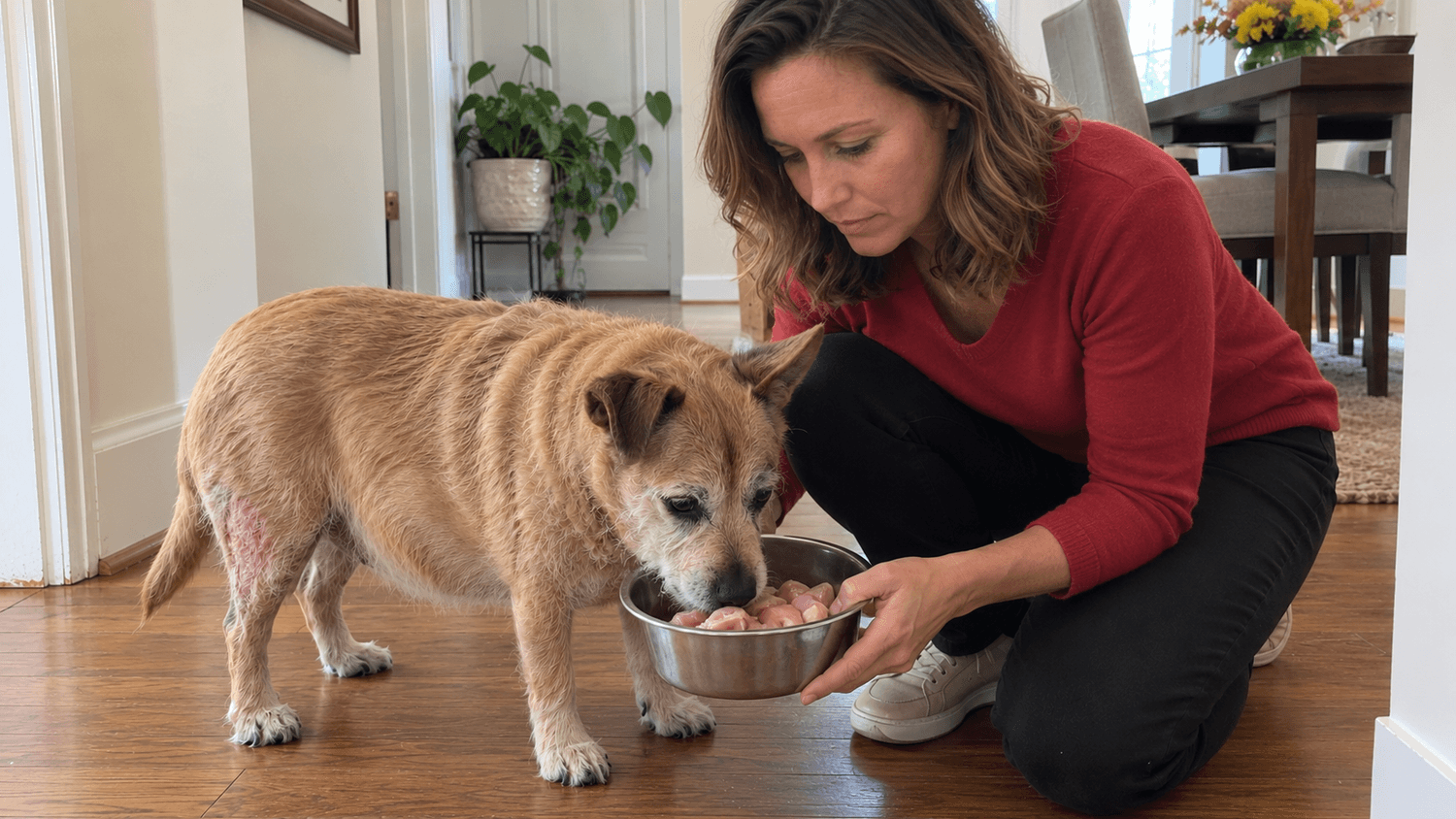
Then my grandfather took him on a ten-day trip. No cooler, no prep, straight back onto the bag. By the time they got home the itching was back and so were the soft stools.
That stretch was the most useful thing in the test. It could've been the weather. It wasn't. It was the bowl.
Two months in: you could see his waist again, the hair grew back on his legs, and he stopped waiting at the bottom of the stairs. Now he waits at the top.
And let me be honest about what Sandy proves. Sloppy raw would've done most of it too. The ratio isn't what you see in month two. It's what you don't see in month ten.
Two months, and he
stopped waiting at the bottom of the stairs.
Before I show you what I built
Let Me Try To Talk You Out Of It
I lose money on the wrong customer. The one at home loses more. So I'll be blunt about the two hours, because a refund costs me more than the sale makes me.
This is for you if
- You can give one Sunday morning a month. About two hours.
- You have freezer space for roughly a week of food.
- You can take fourteen days to transition instead of switching overnight.
- You want to know what's in the bowl, not trust a label.
This is not for you if
- What you want is a box that shows up monthly. That exists, it costs four times as much, and I won't pretend it doesn't work.
- You want a cure for something a vet diagnosed. This is nutrition. Not medicine.
- You can't give me the two hours. Decide that now, before you click, not after.
Introducing

Digital product
Seven years of formula, shortcuts, and every mistake I madeso you don’t have to.
What’s Inside Barbara’s Kit
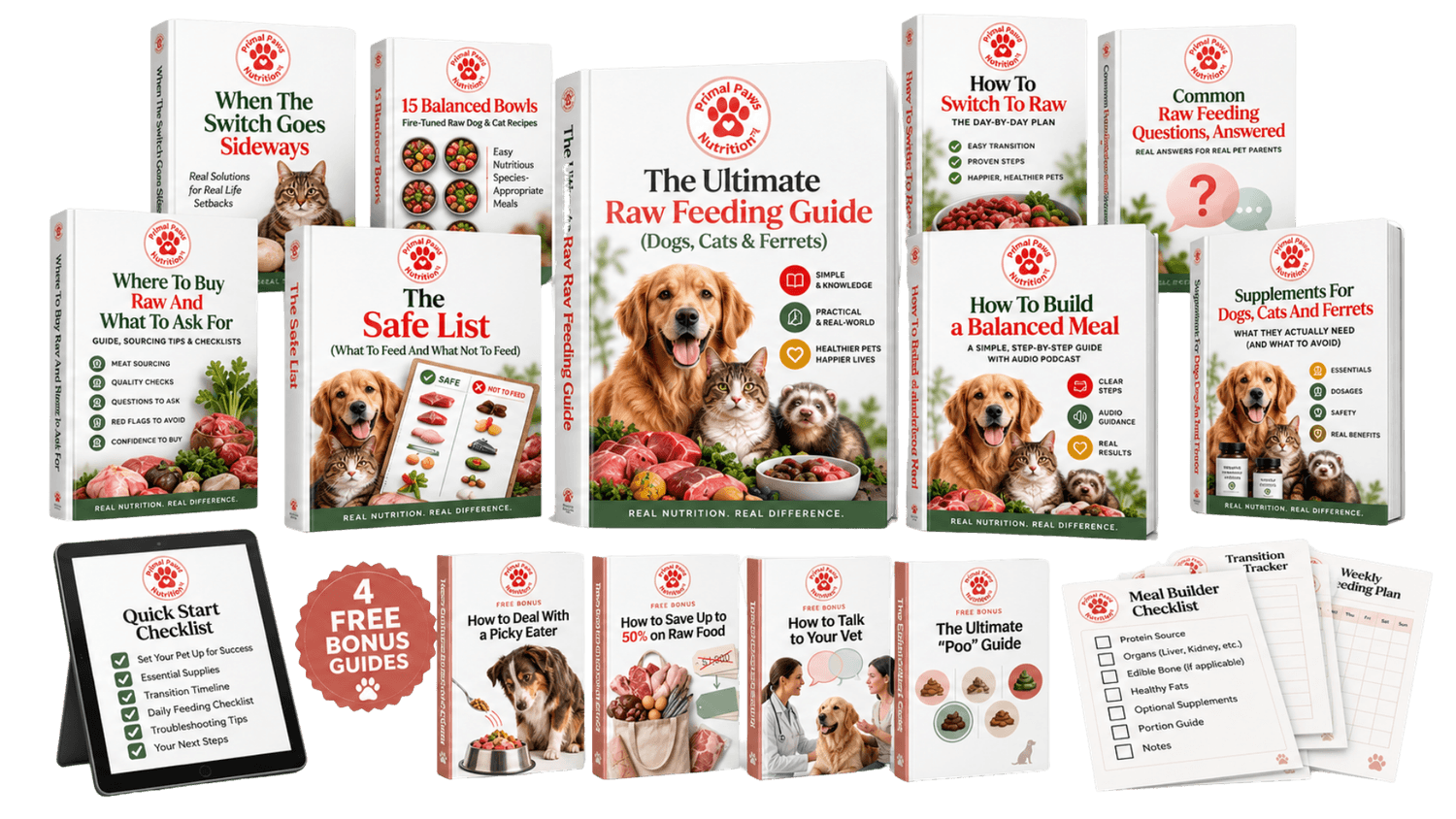
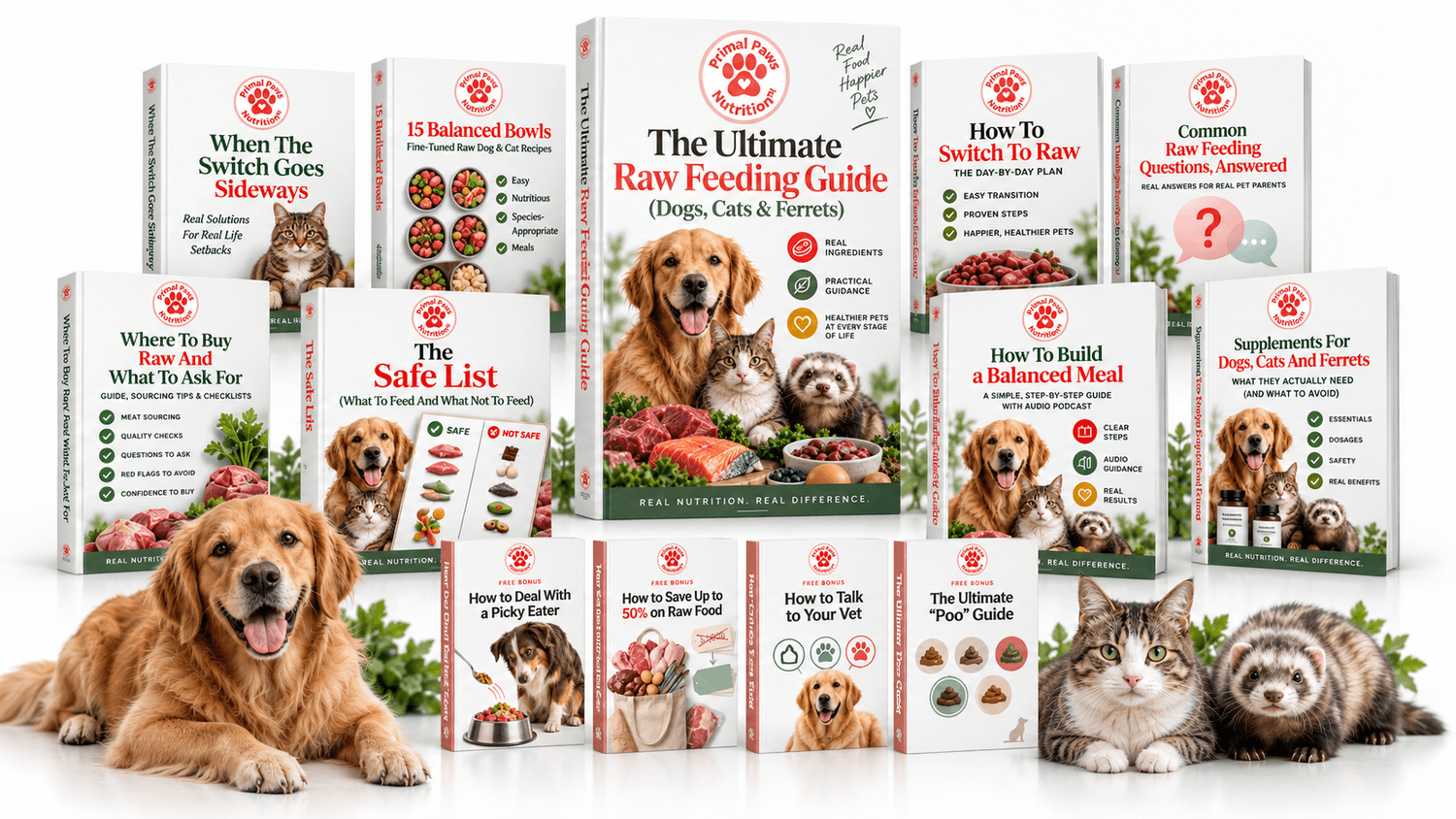
Ten tools, four bonuses, and over five hours of audio in my voice, so you can learn this in the car or with your hands in a bowl of chicken.
Tool #1
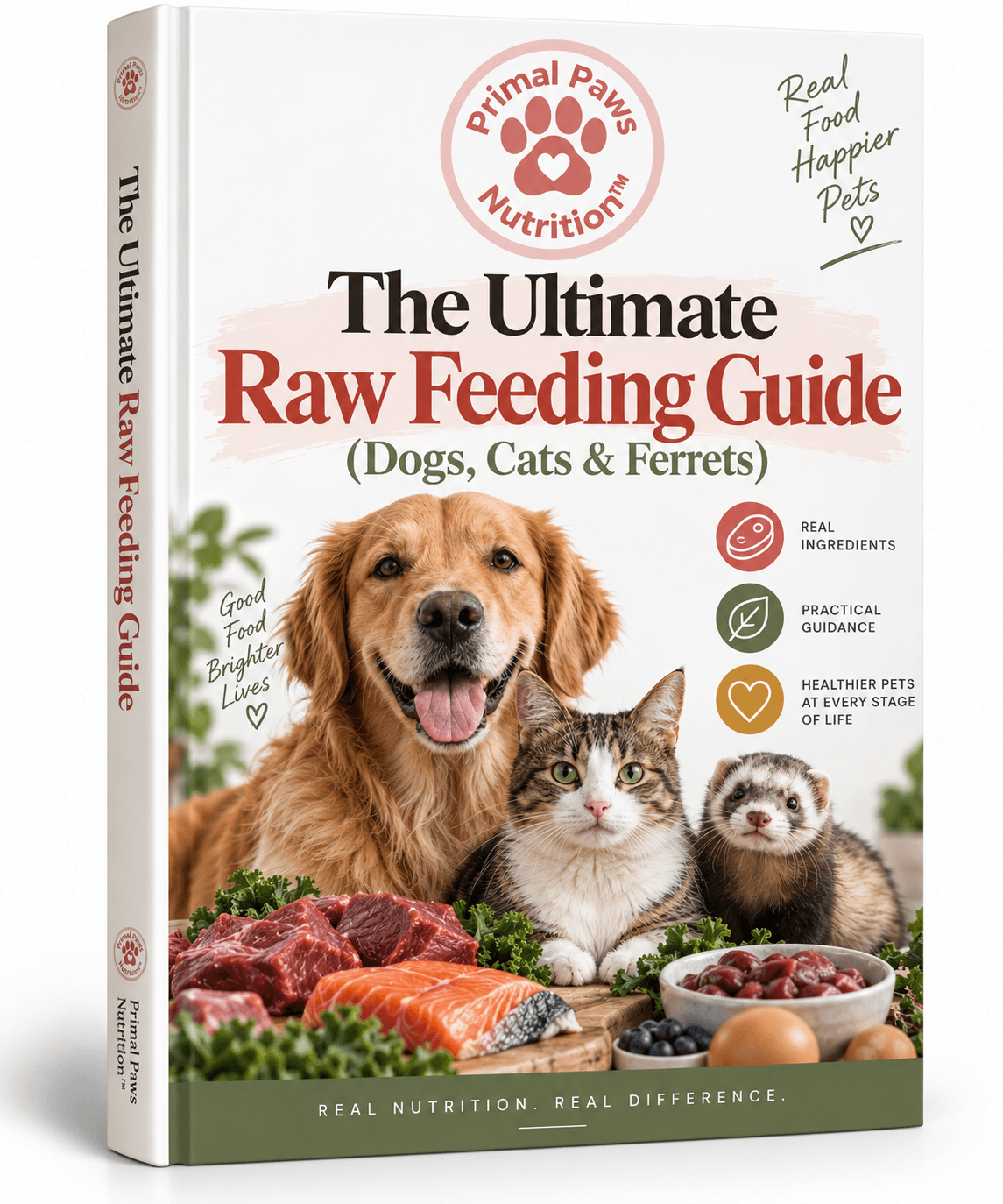
The Ultimate Raw Feeding Guide (Dogs, Cats & Ferrets)
Start here. It answers the question that stops most people before they begin: what exactly goes in the bowl, and how much of it? Three separate guides, one per animal, each with its own section for puppies, kittens and kits. The proportions, the portion for the weight in front of you, and the NRC nutrient tables at the back for the night you want to check my work.
3 guides · 28 pages · 44 min of audio
Tool #2
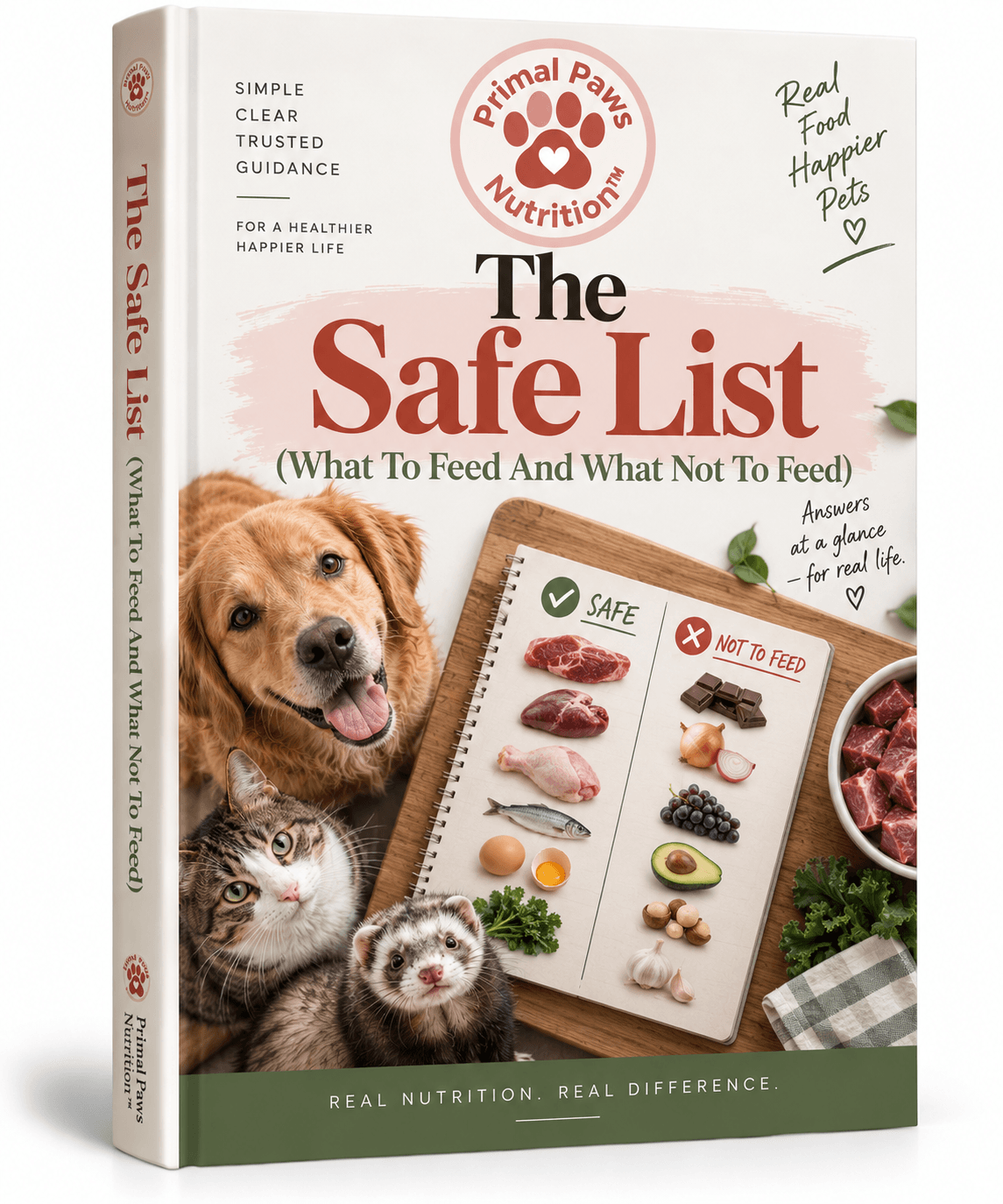
The Safe List (What To Feed And What Not To Feed)
The one that ends the second-guessing. A separate toxic list for each animal, because dogs, cats and ferrets do not overlap the way people assume. Then the part nobody warns you about: calcium, vitamin A, vitamin D, iron, iodine, zinc and copper, and the exact point where each one stops helping and starts doing harm. After this, “is this safe?” is a ten-second question instead of a night on the forums.
10 pages · 26 min of audio
Tool #3
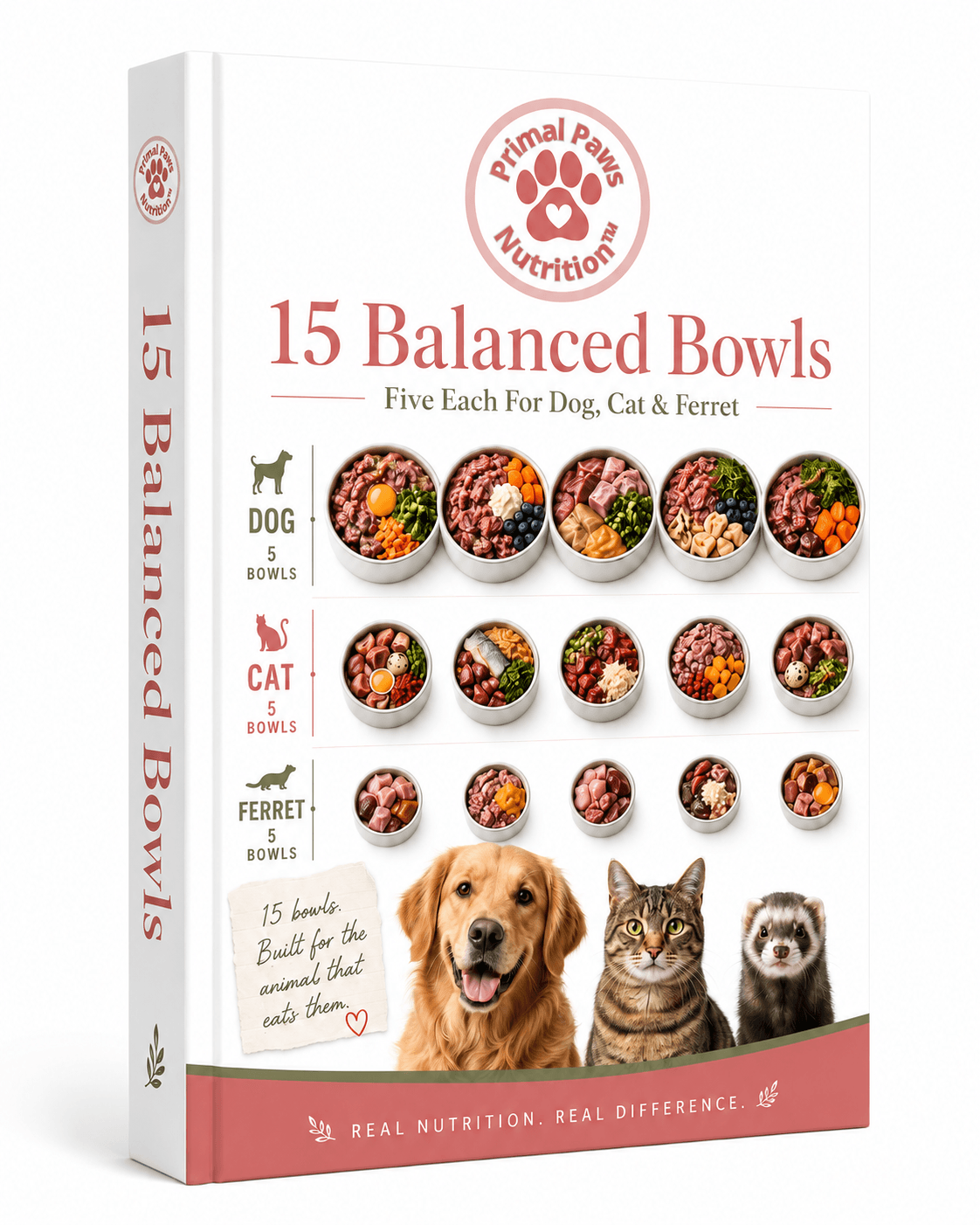
15 Balanced Bowls Five Each For Dog, Cat & Ferret
No math. Fifteen bowls already solved, five for each animal, built for the animal that eats them instead of one recipe relabelled three times. The weights are printed on the page in ounces. You don’t calculate anything. You weigh, you fill, you’re done.
15 recipes · 5 per animal
Tool #4
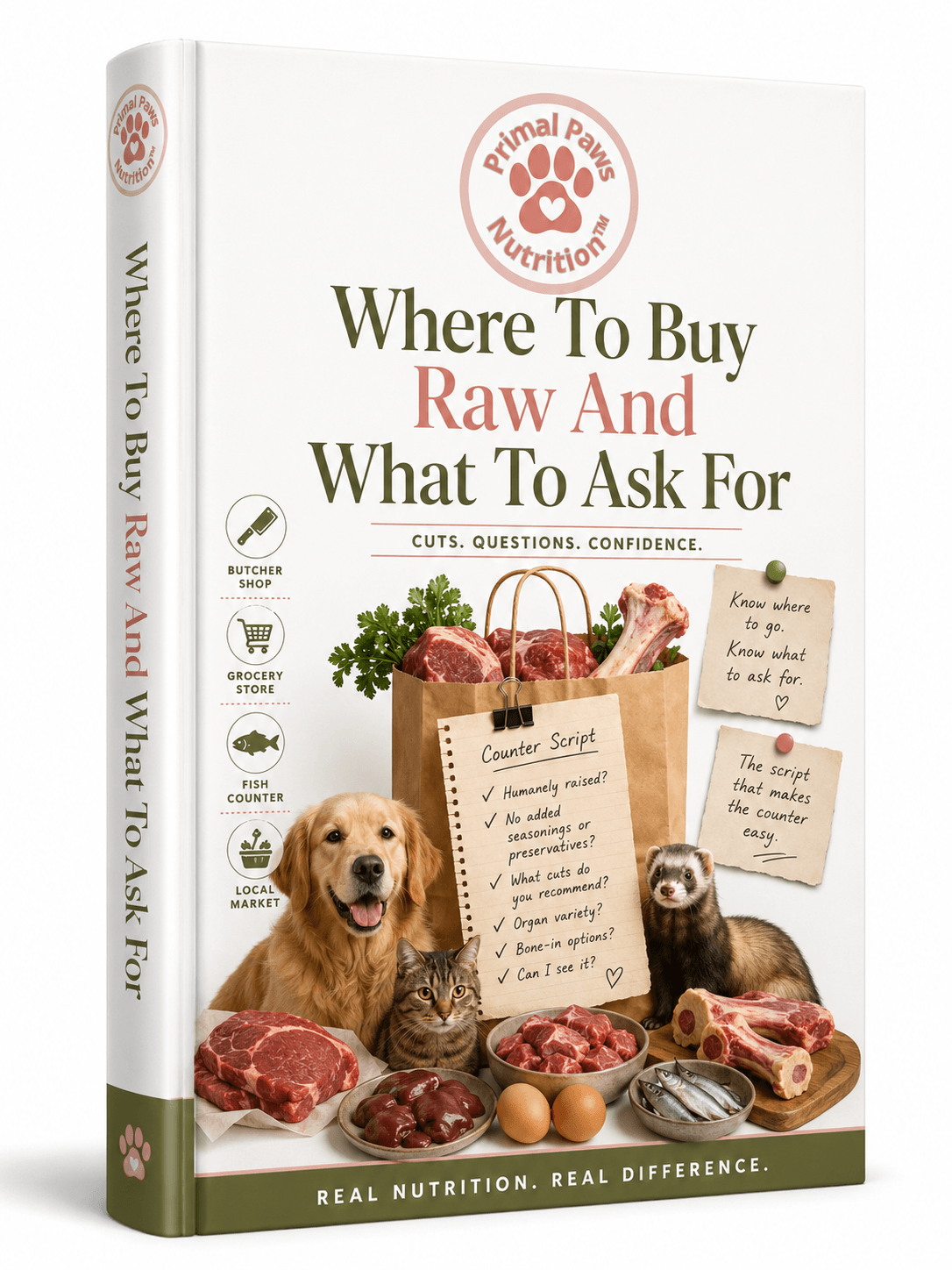
Where To Buy Raw And What To Ask For
For the first trip to the store, when you’re standing at the meat counter with no idea what to point at. A hundred and thirteen cuts, named outright and sorted into the seven things a bowl needs, so you just pick one from each. It also flags the traps: the liver that runs too high in vitamin A, the salmon you don’t buy, and the wild-caught fish that needs three to four weeks in the freezer first.
113 cuts · 6 min of audio
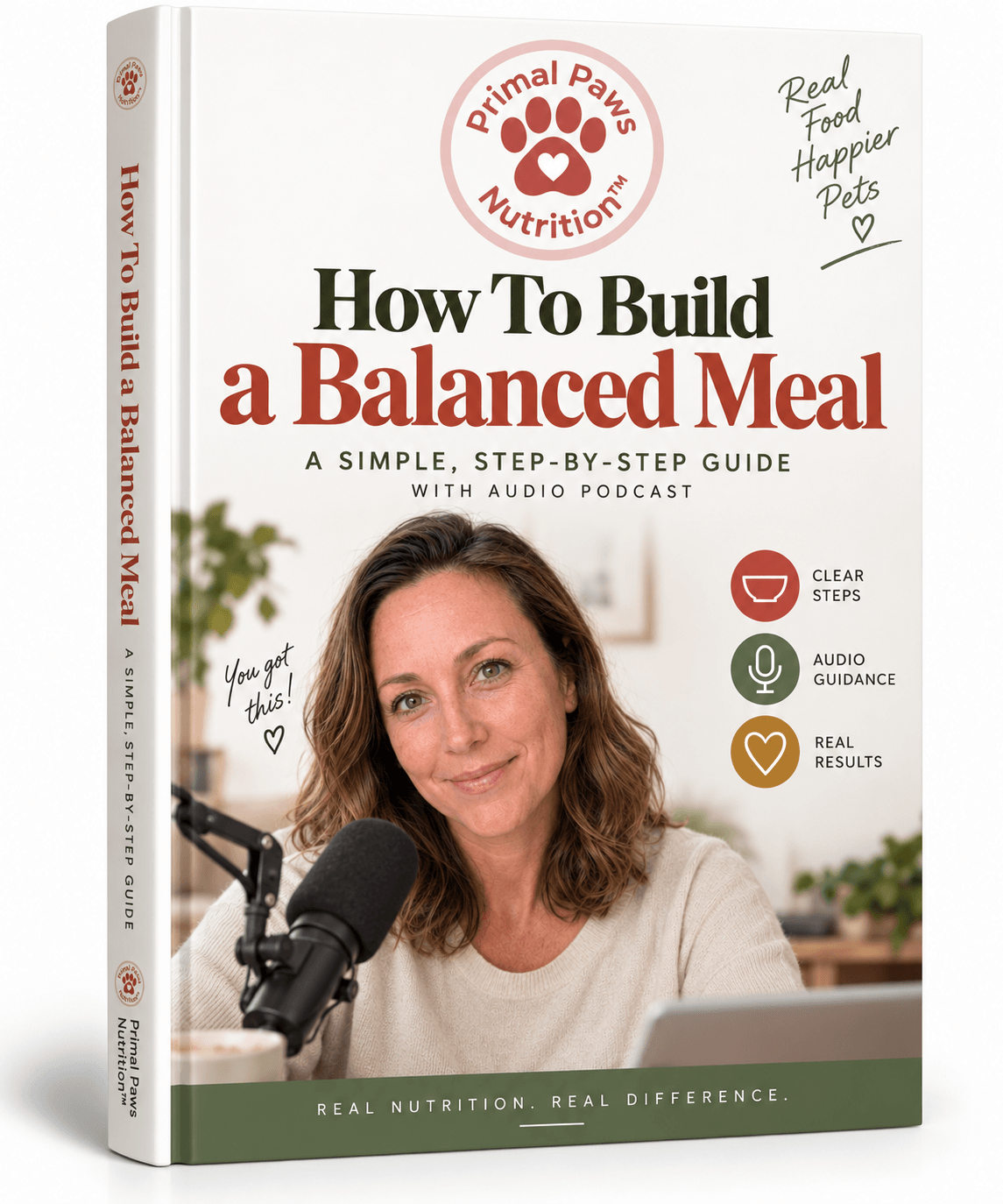
Tool #5
How To Build A Balanced Meal
Follow me through one real prep day on my own kitchen counter: the meaty bones first, then the organs, then the muscle meat, then the containers filled and stacked for the week. You see it done before you do it. Dogs and cats get the whole week. Ferrets get the step that comes first, which is getting a kit to eat raw at all, starting with a raw soup.
3 guides · 18 pages · 25 min of audio
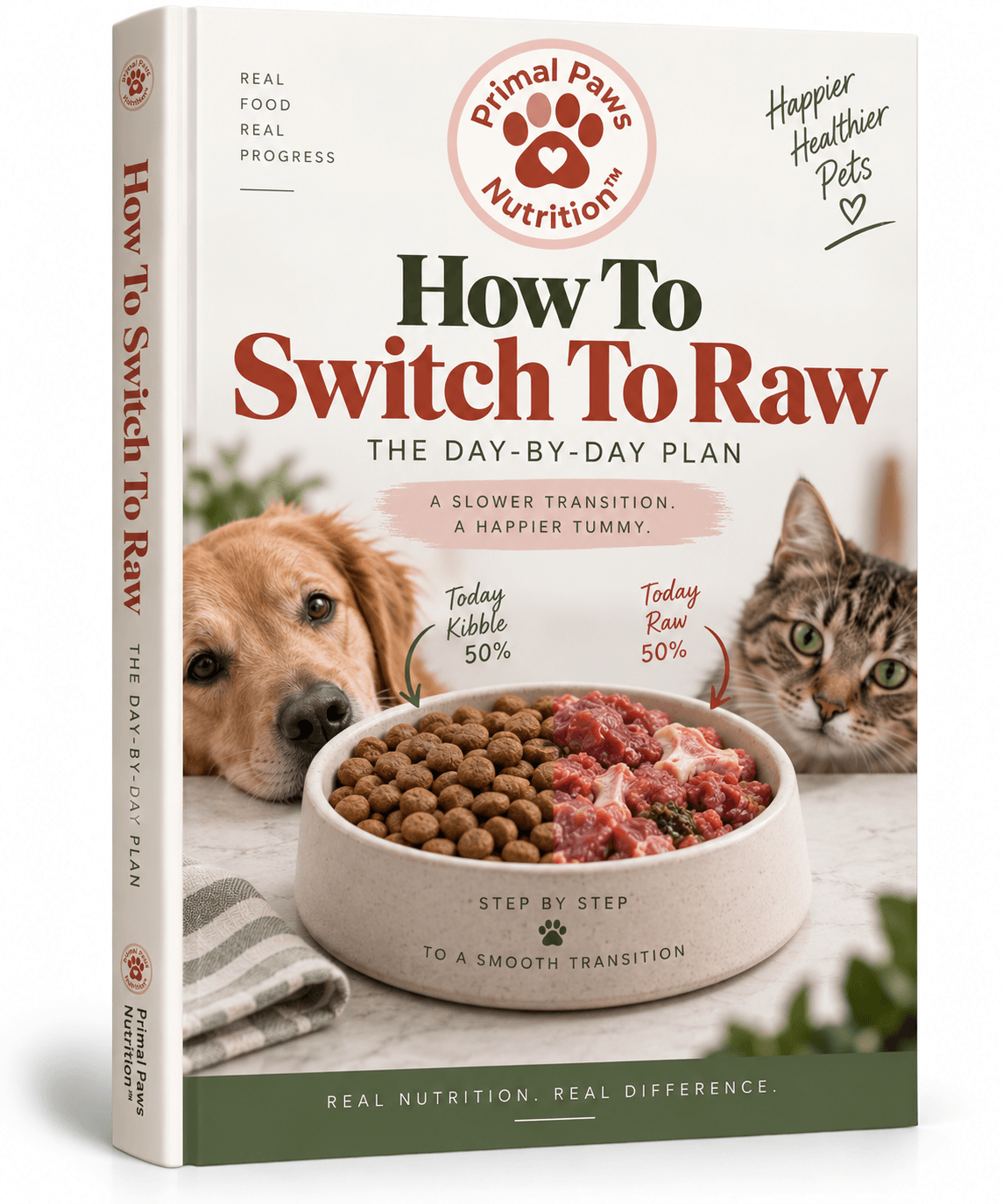
Tool #6
How To Switch To Raw
The one that keeps the switch from going wrong. An eighth at a time, day one to day fourteen, with the exact split of old food and new for every day in between. Then the signs it’s working, and the ones that mean slow down. Almost nobody quits raw because of the food. They quit two days after switching too fast.
13 pages · 16 min of audio
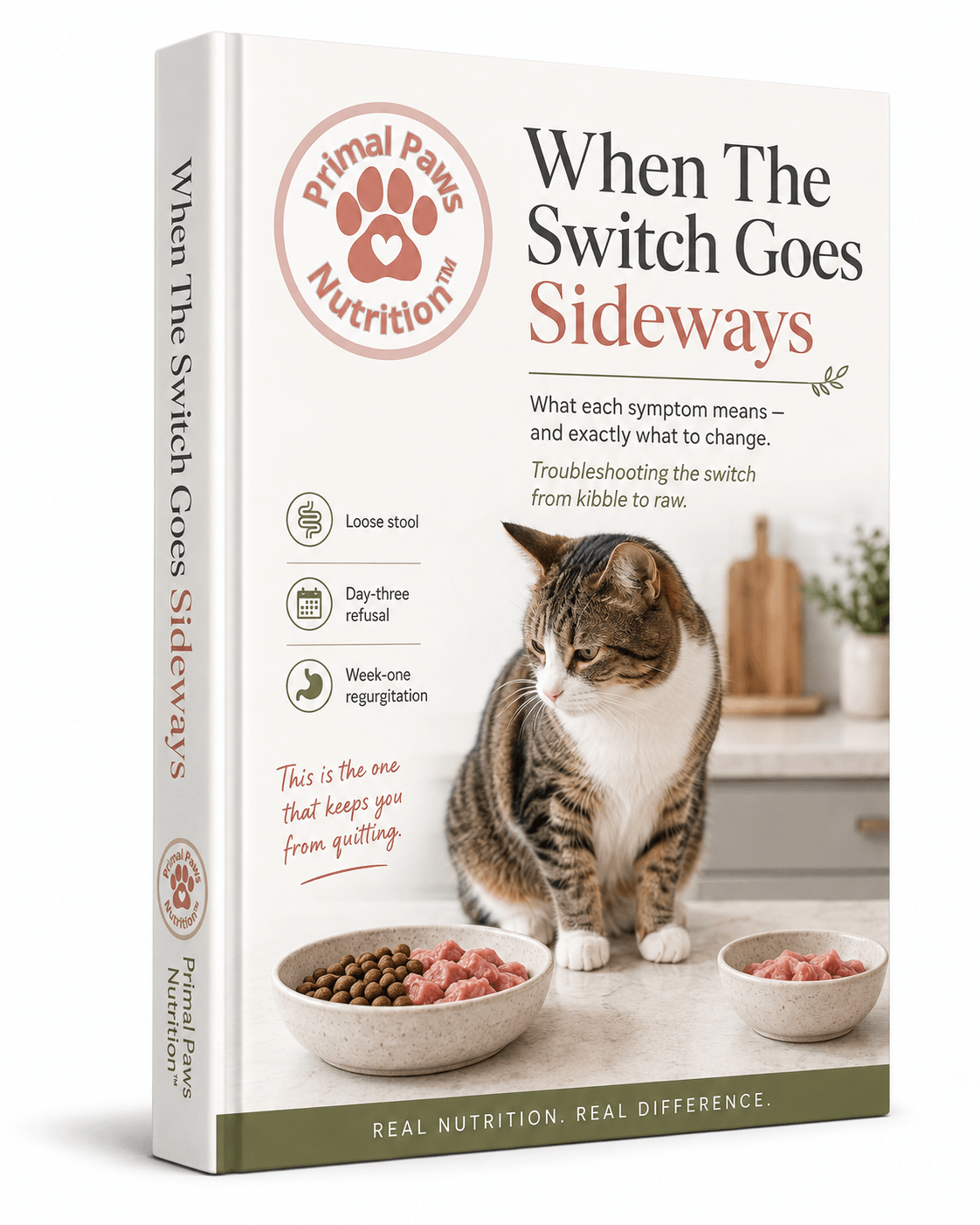
Tool #7
When The Switch Goes Sideways
For the morning something comes out wrong and your stomach drops. Sixteen causes, each with what it’s telling you and exactly what to change. Six of them cause loose stool alone, and they don’t share a fix: too little bone and too much organ look the same in the yard and pull in opposite directions. This is the one that keeps you from quitting in week one.
16 causes · 6 min of audio
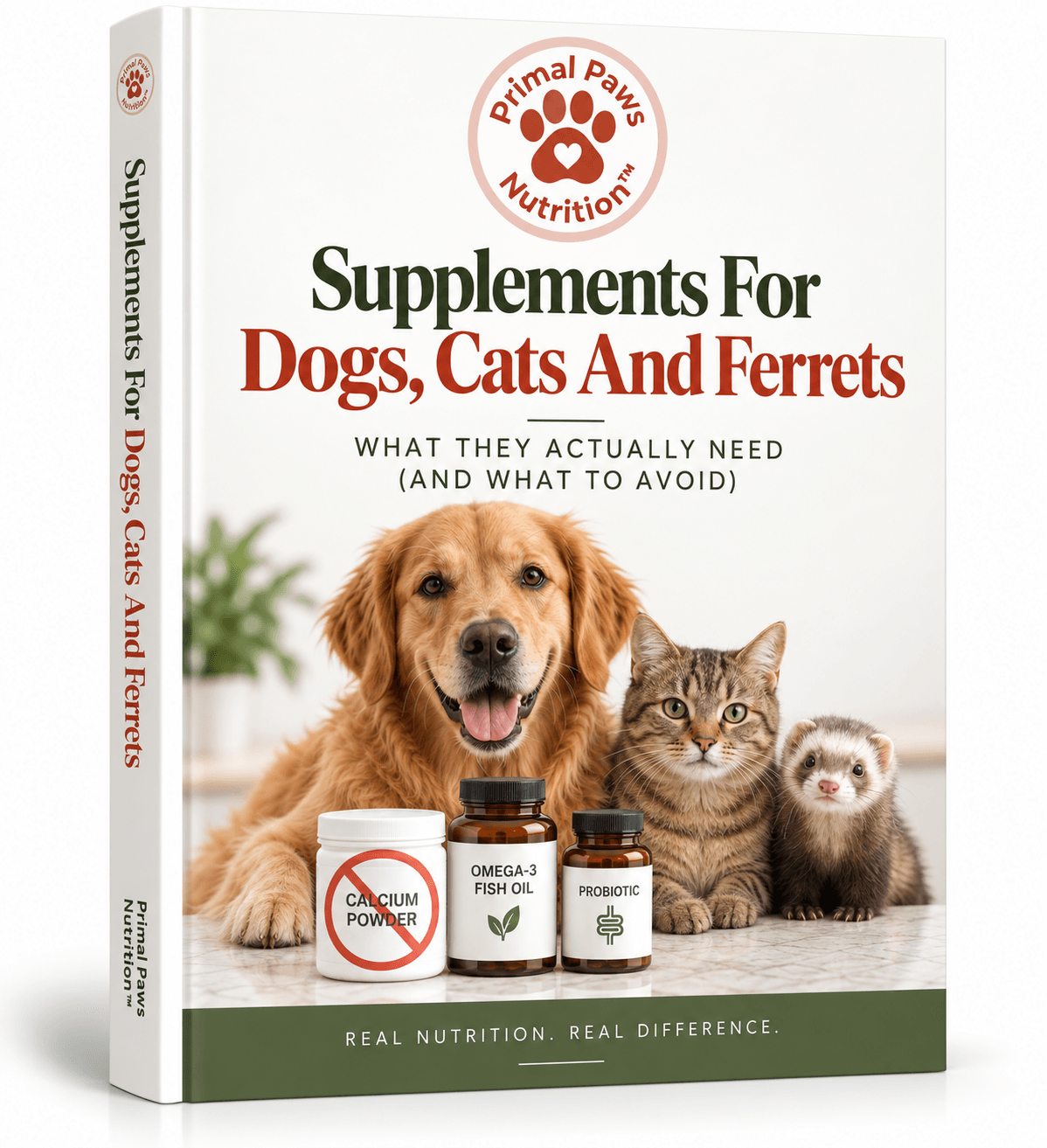
Tool #8
Supplements For Dogs, Cats And Ferrets
Read this before you spend a dollar in the supplement aisle. A dosage chart for every supplement a raw bowl might need, with the exact amount per pound of body weight, and on every single one the condition that says whether you need it at all. Bone meal only if you’re not feeding bone. Vitamin D only if there’s no fish in the bowl. Read the conditions first and most of the shelf stops applying to you.
Dosage chart · 7 min of audio
Tool #9
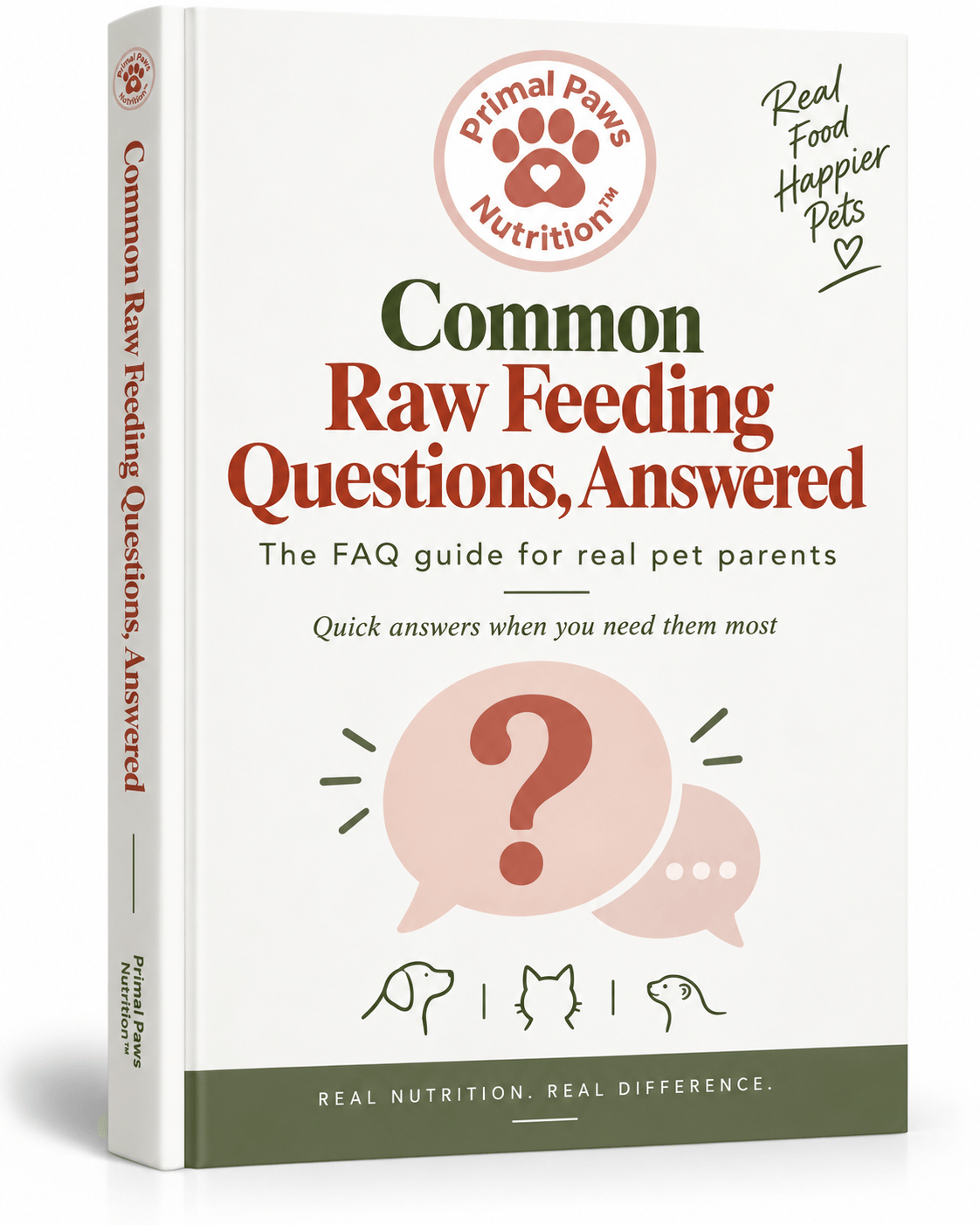
Common Raw Feeding Questions, Answered
Eighty-two questions, answered once, so you’re not searching at midnight. Can I mix kibble and raw. Do I have to freeze the meat first. Is it safe with a baby in the house. What do I do when the power goes out and the freezer is full of it. This is the one you’ll still be opening in month six.
82 answers · 20 pages · 33 min of audio

Tool #10
The Raw Feeding Podcast (Ten Sessions, Read By Barbara)
The tenth tool isn’t a guide at all. Ten long sessions, ninety-seven minutes, in my voice, on the parts of raw feeding that take more than a page to explain: nutrient ratios, keeping fleas and ticks away without chemicals, feeding through every life stage, how to read your own recipe, and thirteen real bowls from real pet parents, reviewed with every mistake left in. Put one on while you’re weighing meat. None of them need a screen.
10 episodes · 97 min · printable transcripts
Listen To What Pet Parents Are Saying
This isn't theory. I've walked more than +10,000 pet parents through this exact method. Dogs, cats, and ferrets.

"One night I noticed it was quiet."
Willow's a rescue, no idea what she is. She licked that paw every night and I'd lie there feeling useless. Then I did Barbara's method. Two weeks… no, three. And one night I noticed it was quiet.
★★★★★
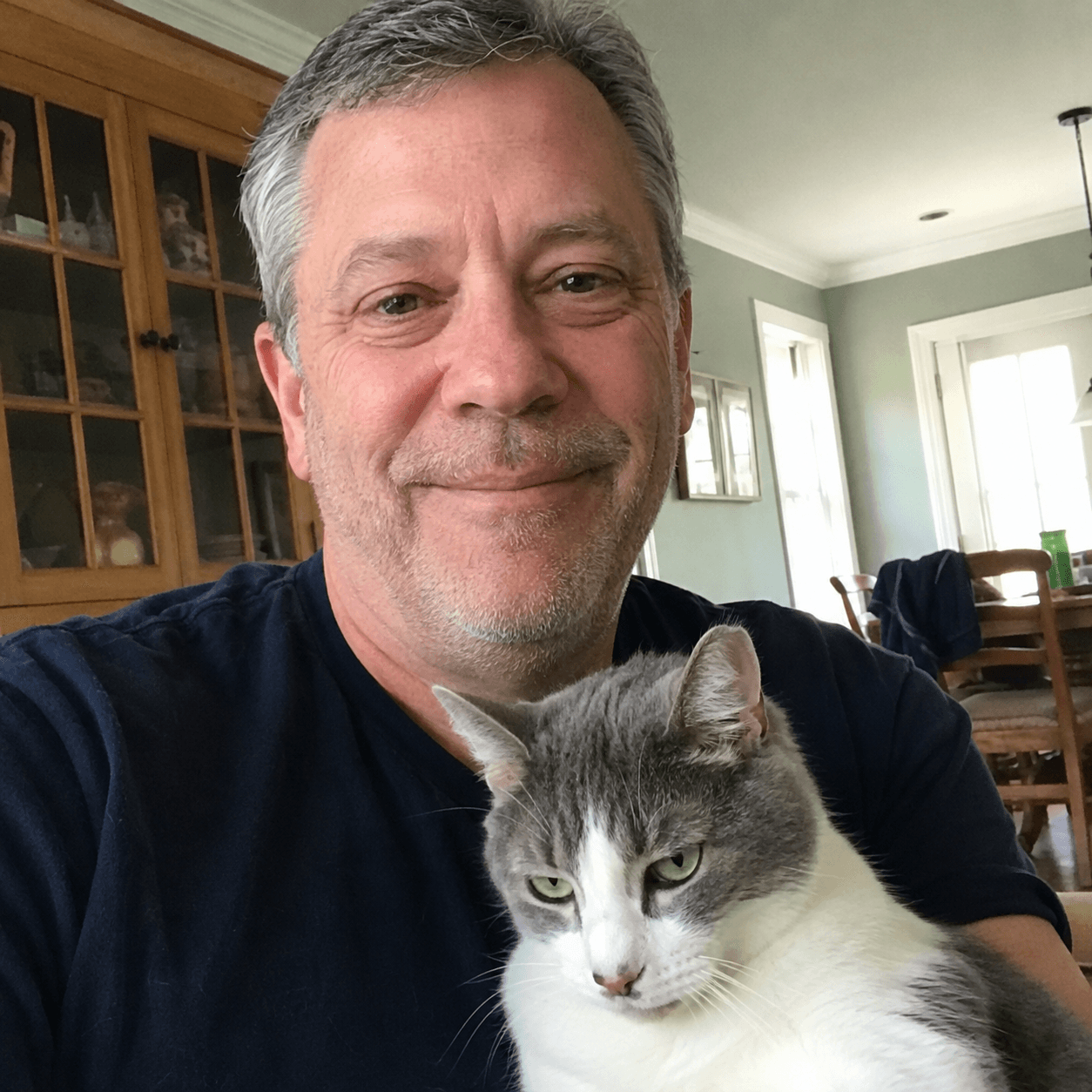
"Everybody said hairballs. I stopped believing that around year four."
Nala's eleven. She threw up two, three times a week for years and everybody said hairballs. Three weeks on Barbara's method and she stopped. Now she sleeps on my chest.
★★★★★

"The math is what stopped me. For two years."
I'm seventy-one and Buddy is a thirteen-year-old terrier mix. My daughter told me about this two years ago and every time I sat down with those calculators I closed the laptop again. Barbara already did that part. You put in his weight and it gives you the amounts. My first bowl took about ten minutes on a Sunday.
★★★★★
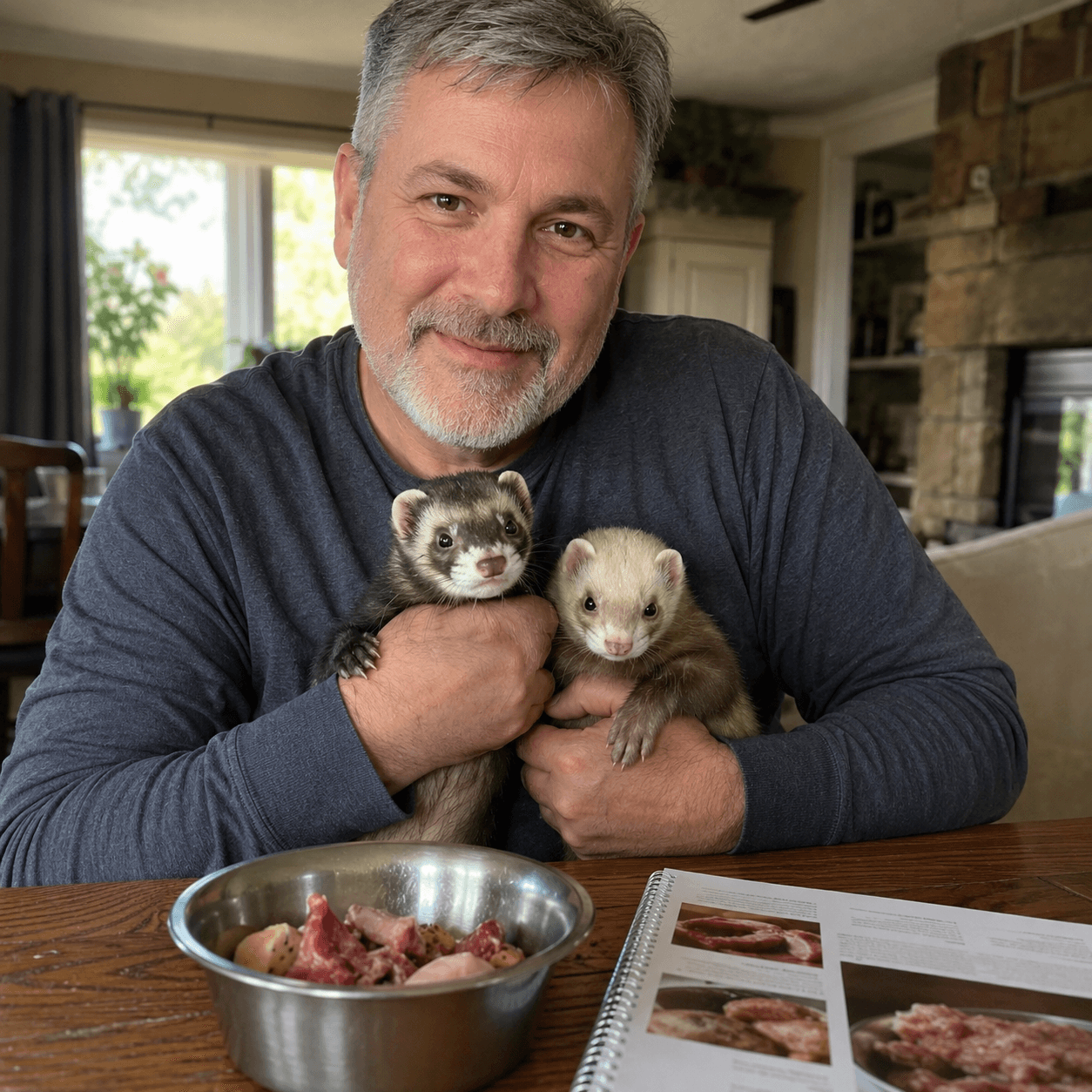
"Everything I found was written for dogs."
Bandit and Milo are ferrets. Try finding a straight answer on what a ferret is supposed to eat. Every thread I landed on was a dog page with a note at the bottom saying to scale it down. This has numbers for ferrets. About five weeks in, Bandit stopped smelling the way people warn you ferrets smell.
★★★★★
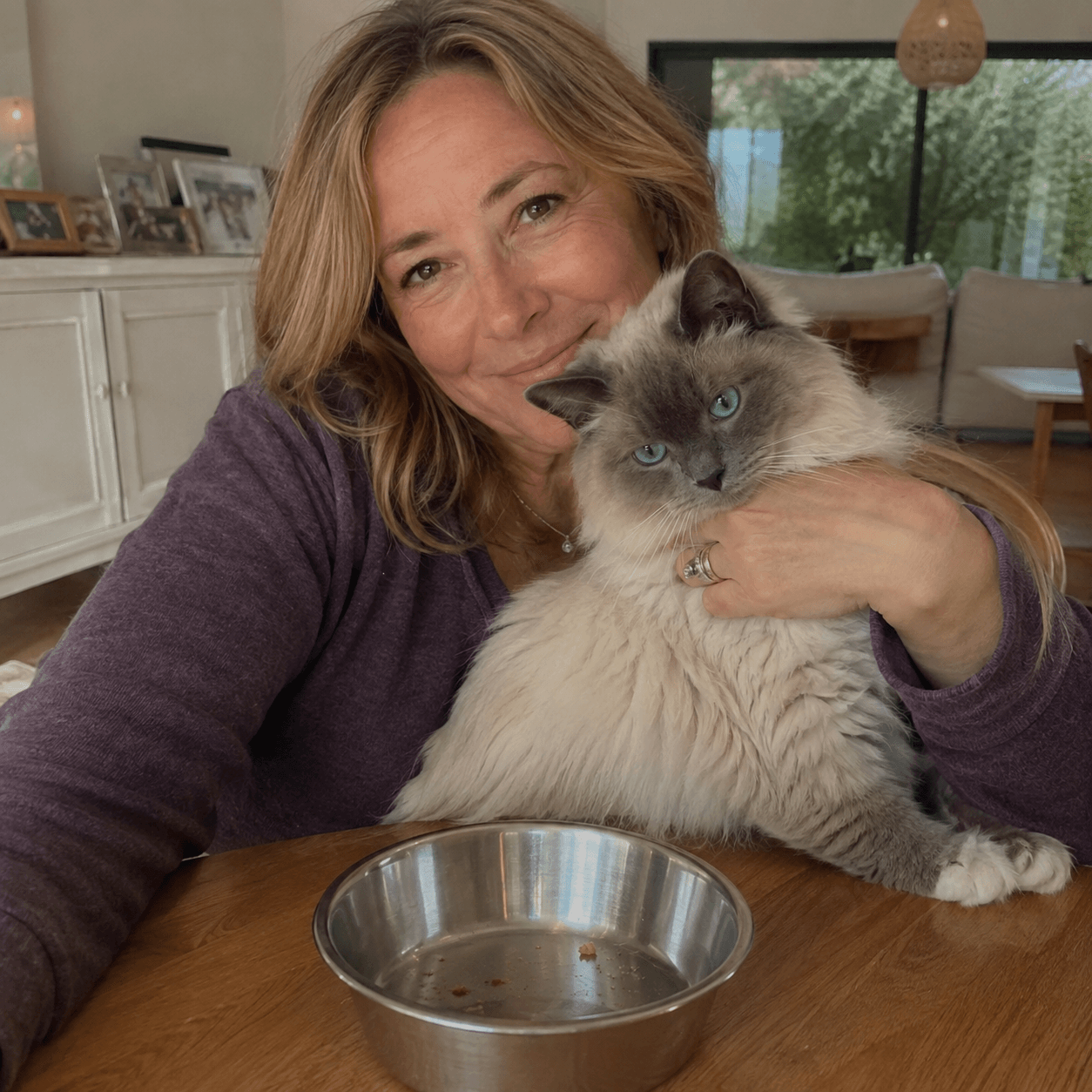
"I almost quit on day six."
Oliver is nine and he had eaten the same dry food his whole life. The first week he walked up to the bowl, sniffed it and walked off. Every single time. The topper trick in the picky eater guide is what turned him. He licks the bowl clean now.
★★★★★
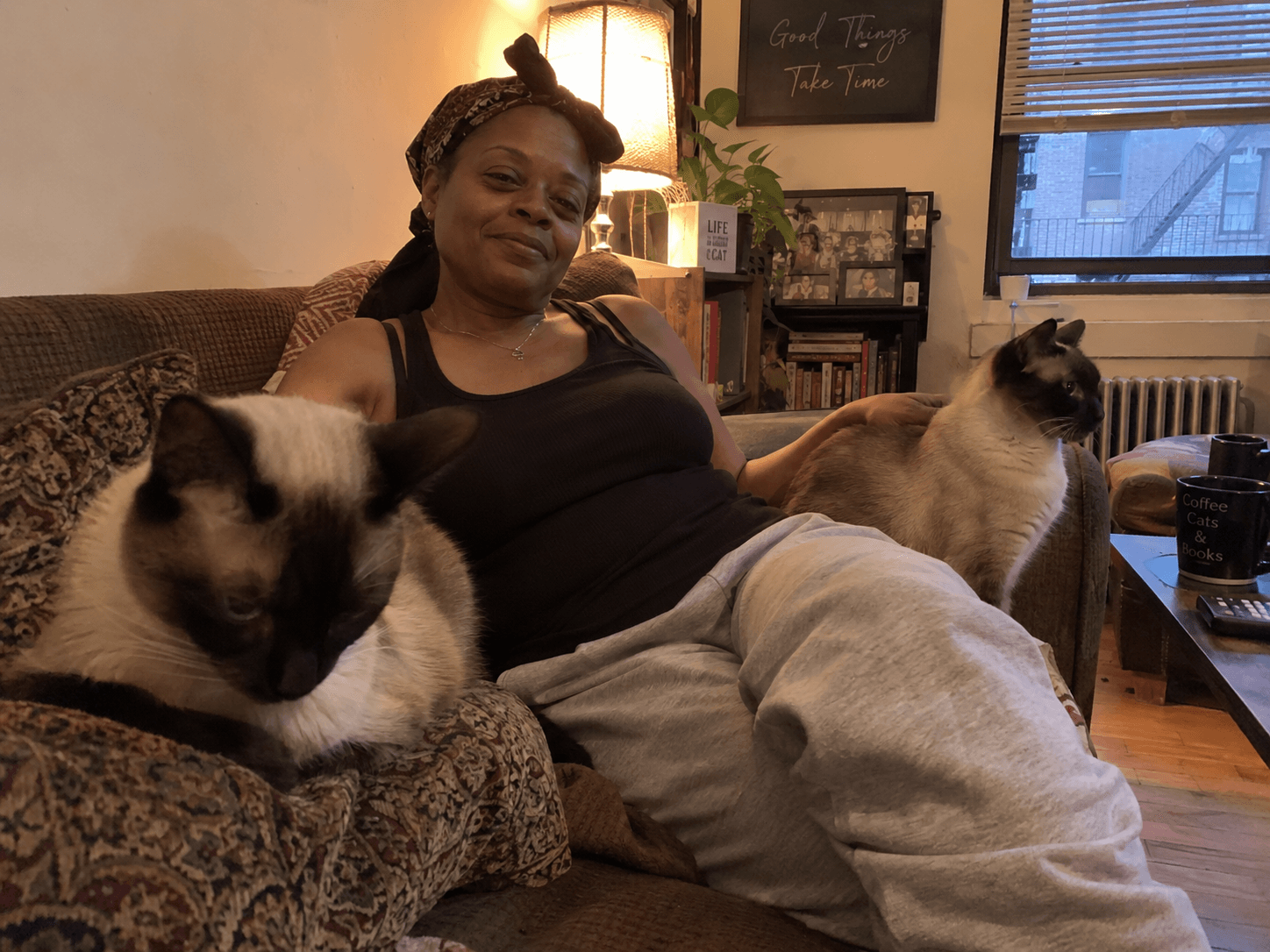
"I priced the delivery box for two cats and closed the tab."
Luna and Jasper are both eleven. That box was more than my electric bill, for two cats. Now I do one Sunday a month and the whole thing fits in the top of my freezer. I live in a one bedroom. It costs me about what the good bag used to cost.
★★★★★
* Individual results vary. Testimonials reflect personal experiences and are not guarantees of specific outcomes.
Real Bowls From Real Kitchens
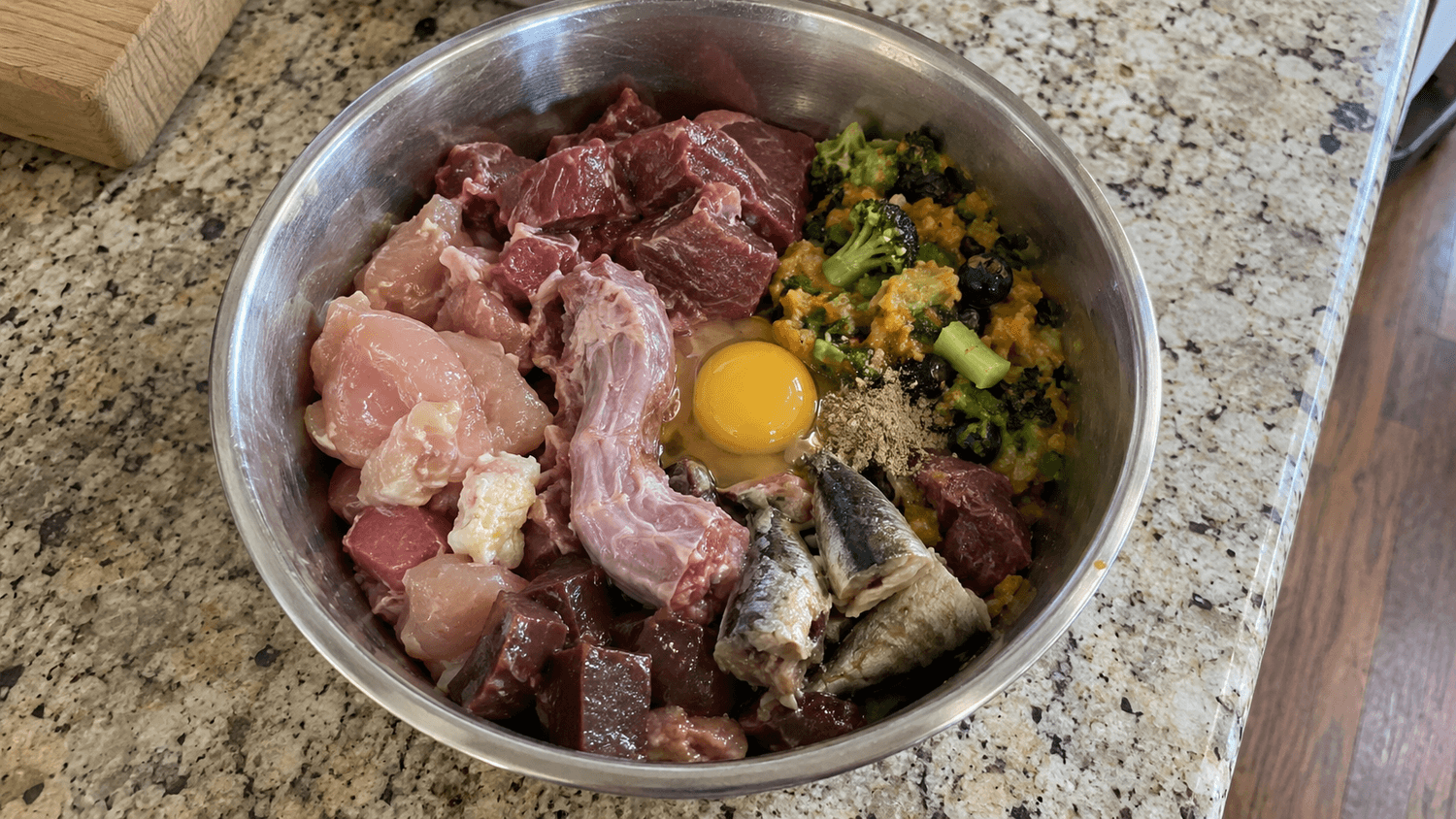
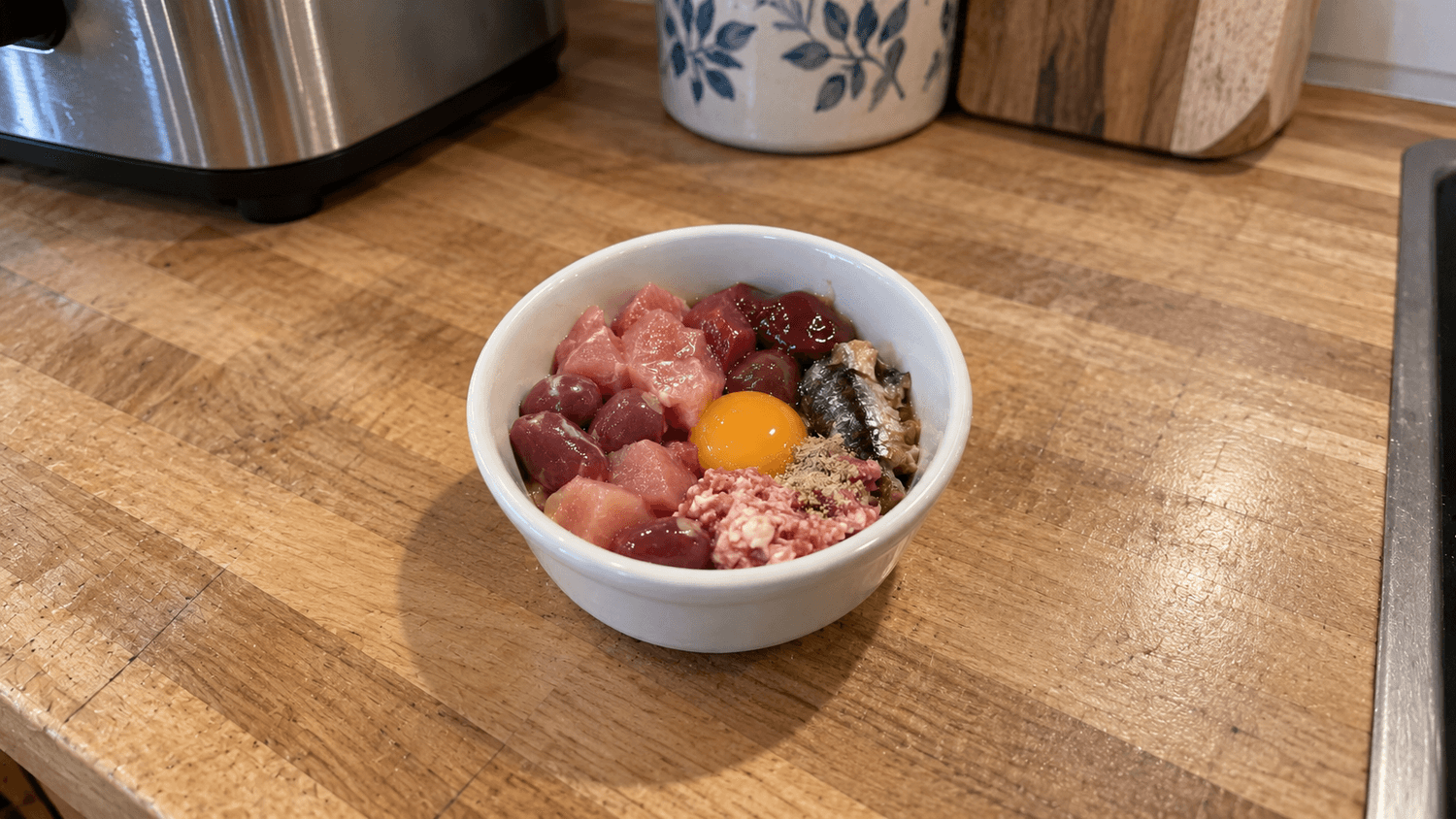
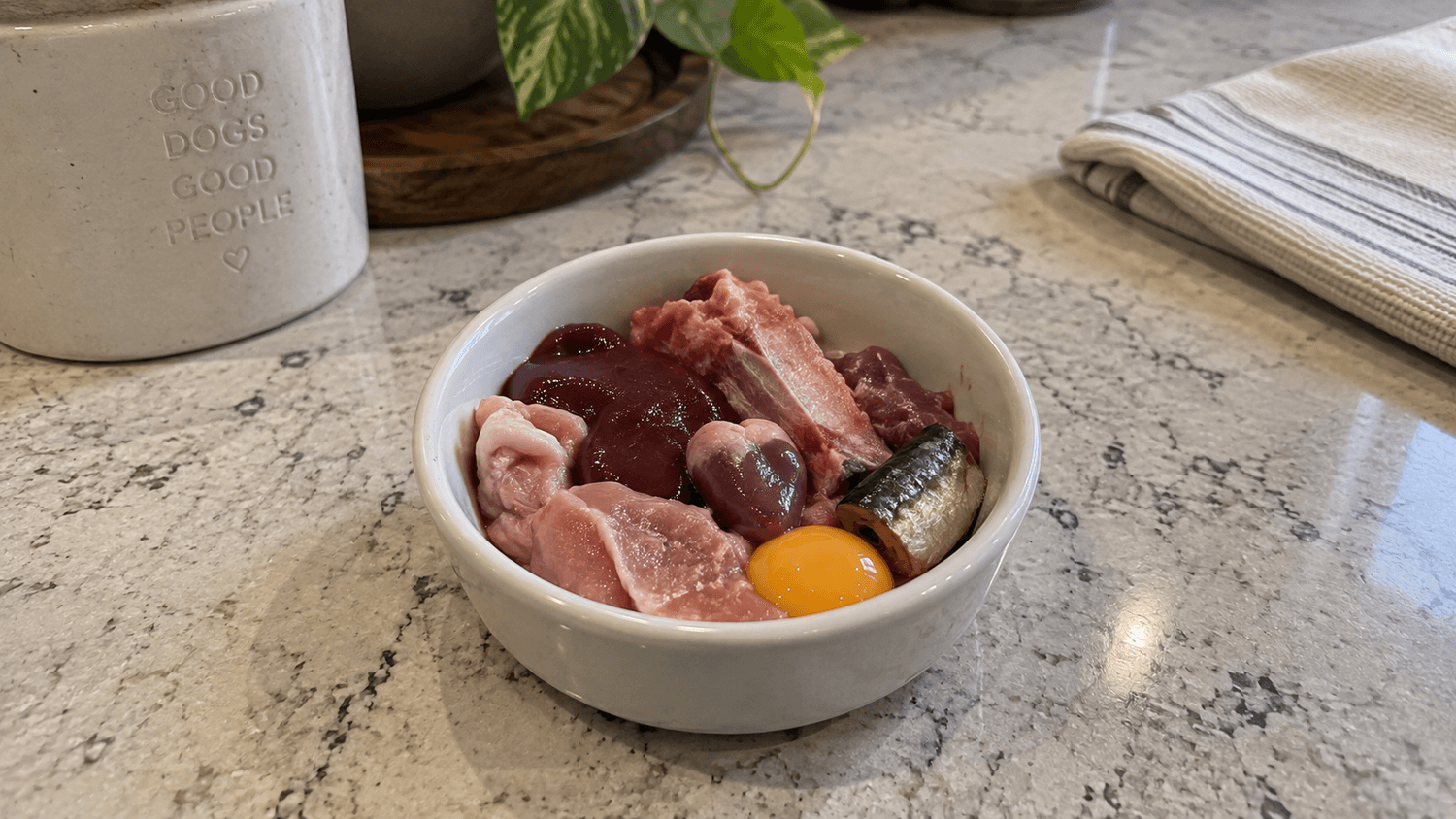
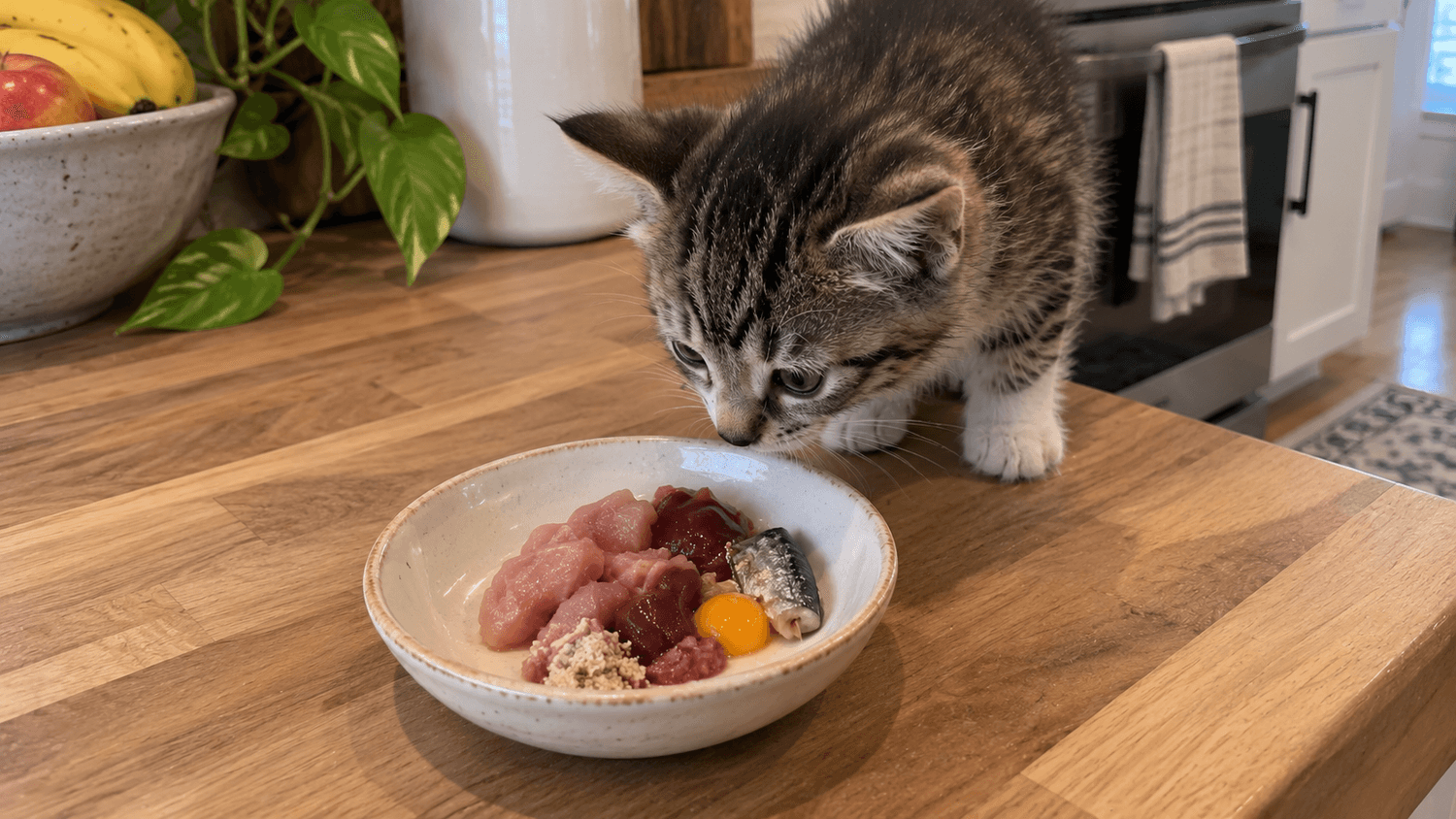
+10,000 pet parents have already done this,
on their own kitchen counters.
Your Purchase Is
100% Risk-Free
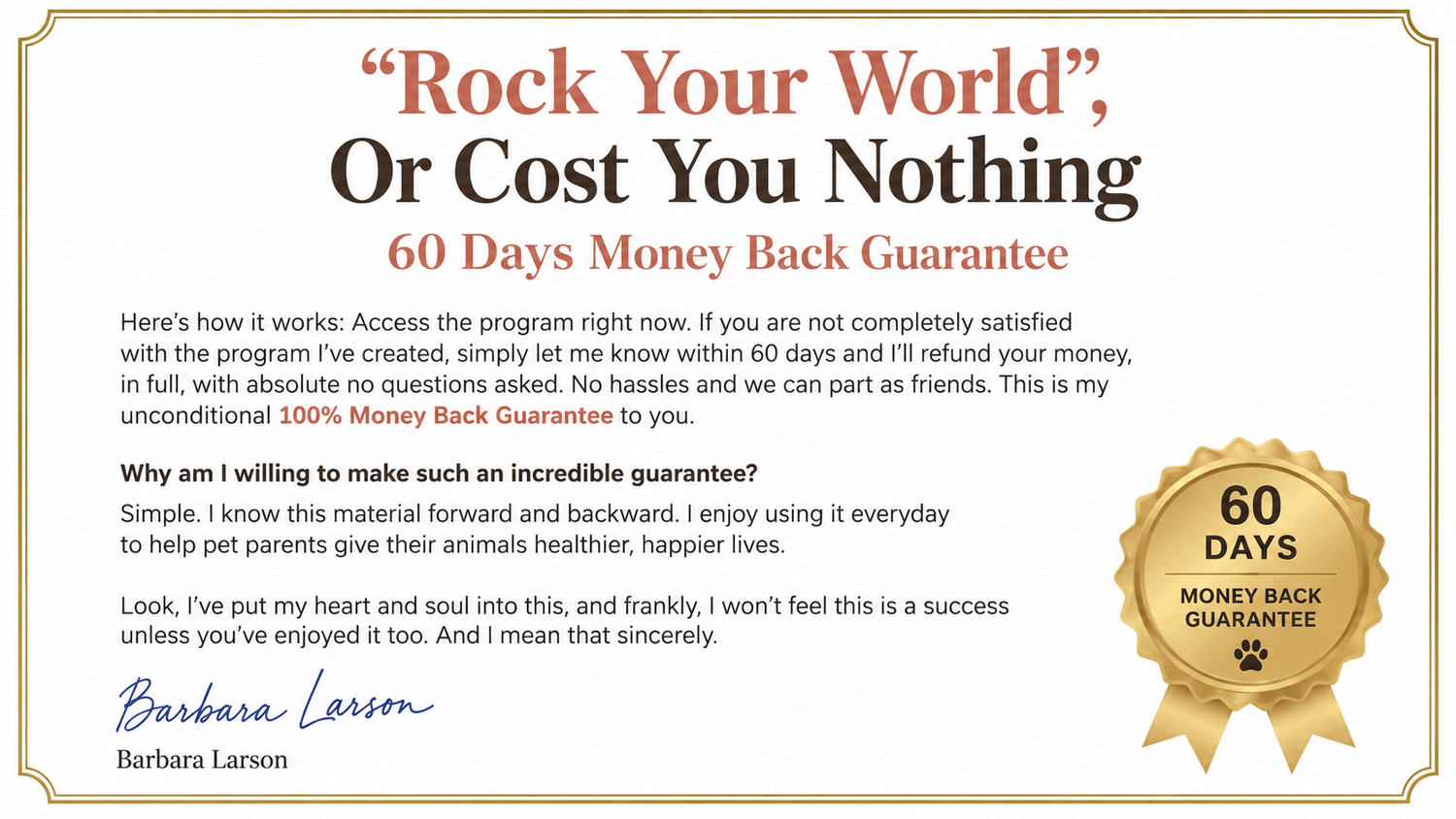
60 Days · 100% Money Back.
I'm carrying the risk, not you.
Plus These 4 Bonuses, Free
And I'll tell you why these four. They're what stops people in the first 30 days.
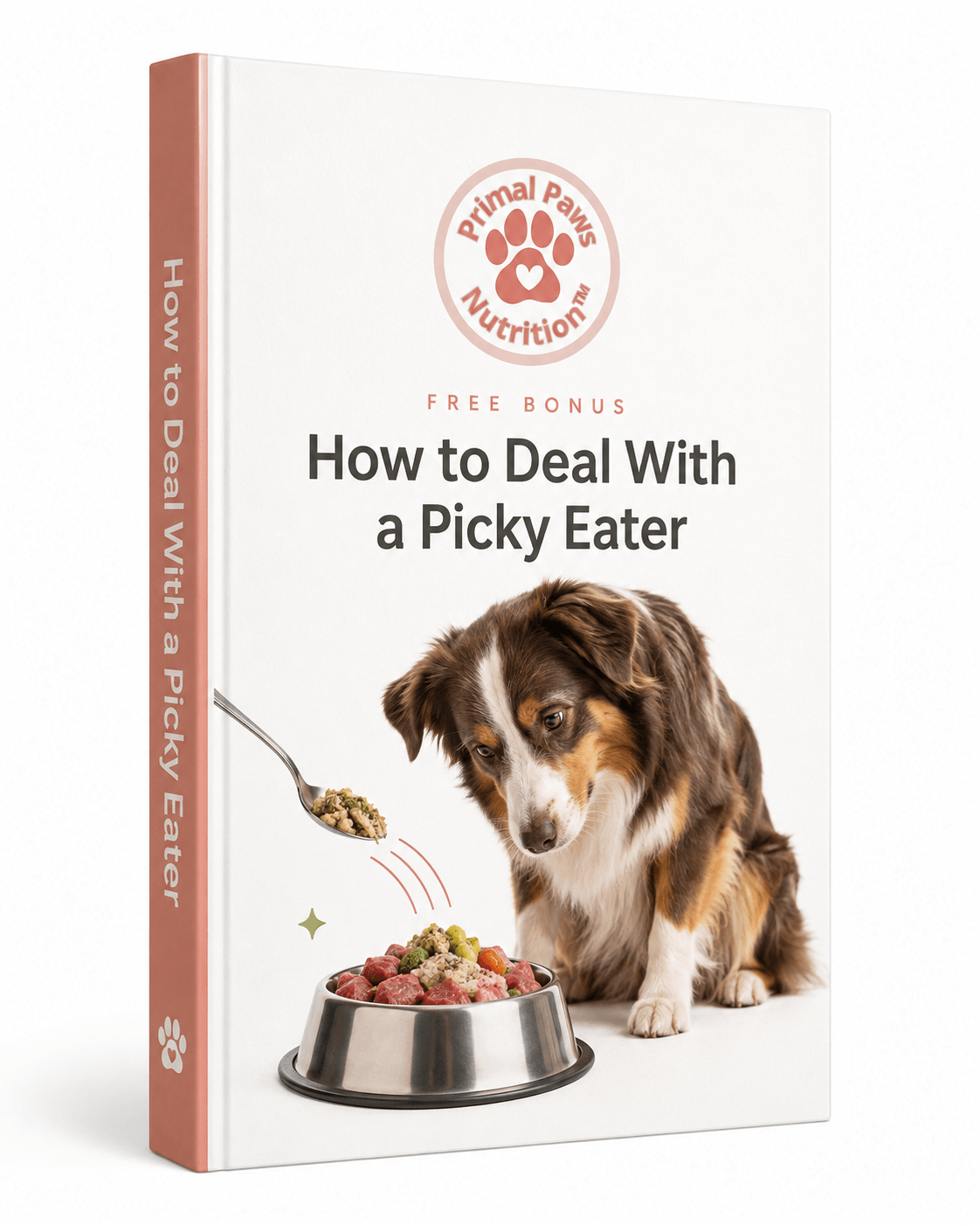
How To Feed A Picky Eater
For day three, when they walk up to the bowl, sniff it, and walk away. That’s the day most people give up. Temperature, texture, a different bowl, a different room, and the toppers that actually turn it around: nutritional yeast, the juice from a tin of fish, freeze-dried crumbs, kefir. Plus the habit that makes it worse without you noticing: answering every refusal with a better offer.
6 pages · 9 min of audio

The Ultimate Poo Guide
Which sounds like a joke and isn’t. It’s the fastest feedback you’ll ever get on a raw diet. Eleven types by color and texture, from dark brown to “raspberry jam”, and what each one says about the bowl you just built, with a version for each animal. Black is not dark brown and doesn’t mean the same thing. One look in the yard tells you the ratio is off before anything else does.
3 guides · 18 min of audio

How To Talk To Your Vet About Raw
Not how to fight your vet. Your vet is not the enemy. Five objections answered in the words you’d actually use in the exam room: nutrients, bacteria, parasites, bones, and the bloodwork one, when they tell you the BUN and creatinine look high. You walk in with an answer instead of an apology.
5 objections · 5 min of audio
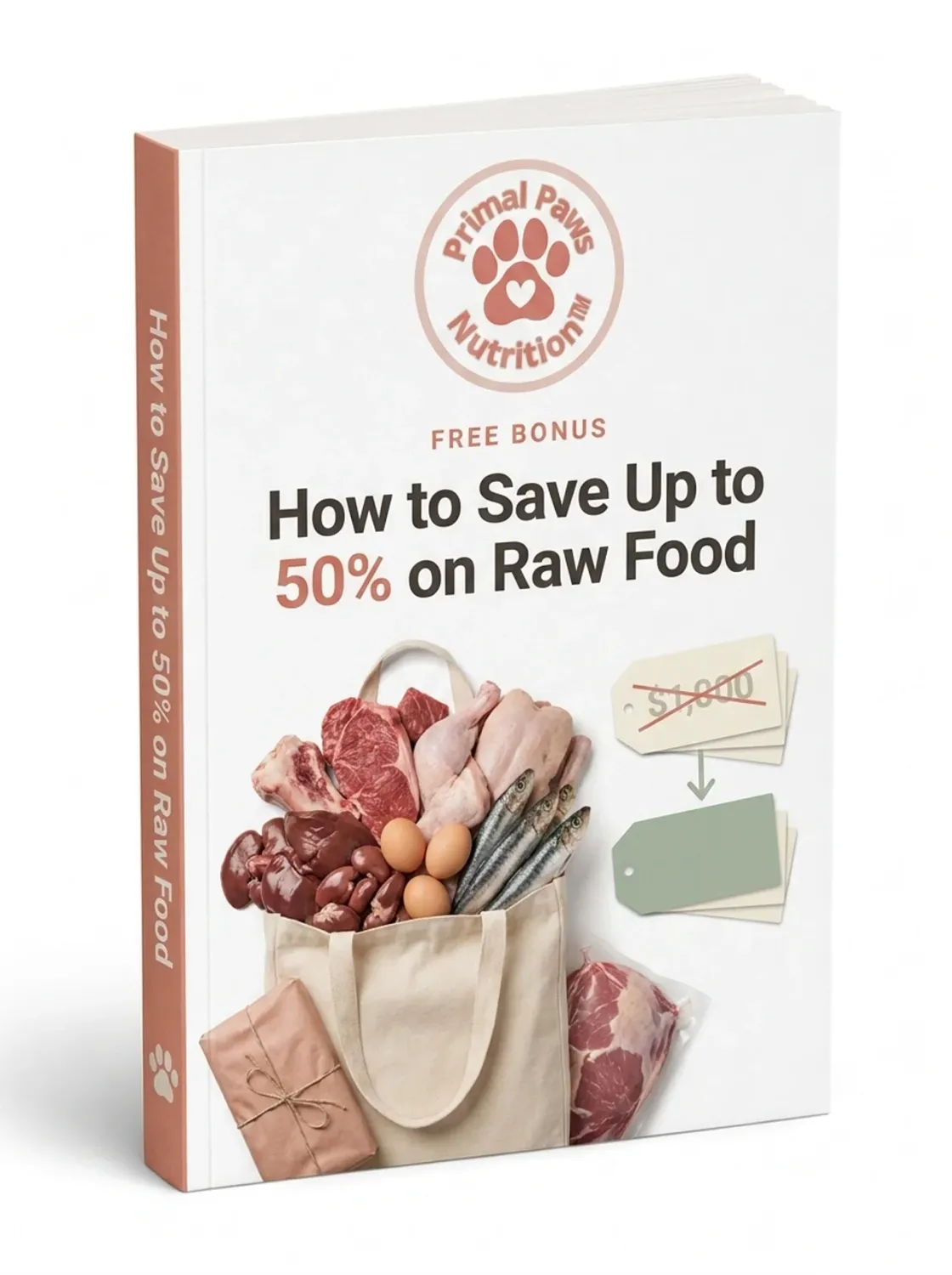
How To Save Up To 50% On Raw Food
Raw doesn’t have to cost more than the premium bag you’re buying now. This shows where the money actually goes, which is rarely where people look. Compare usable yield, not package weight. Cost the whole recipe, not the cheap ingredient. Price supplements per dose. And stop buying the bargain that spoils before you reach the bottom of it. Same bowl, smaller bill.
5 pages · 9 min of audio
Picture Your Fridge Two Months From Now
Sunday portions already frozen. Three minutes in the morning, and you walk away.
And the one in front of that bowl isn't the one you've got this week.
- It's the coat somebody stops you about at the park, to ask what you feed them.
- It's poops you pick up in one bag without making a face.
- It's a cat who isn't at the water bowl anymore, and quiet nights.
- And it's the stairs. One day you look up and they just took them.
Right Now You've Got 3 Options
Keep Buying The Bag
You may figure the itching is allergies and the vomiting is hairballs. Plenty of people do. More power to you.
"Some dogs are just sensitive." "That's just his breed." "She's always been a pukey cat."
That sentence is the most expensive thing anybody's ever said to you about yours. It's an ending. It closes the file, so you stop looking.
Pay For The Box
Real food, delivered, portioned. Four hundred a month, every year, for as long as they're alive.
That exists, it costs four times as much, and I won't pretend it doesn't work. It works. It's just that you're renting the answer instead of owning it, and the day you stop paying you're back where you started.
Own The Number
Somebody does the math once and writes it down. You follow the card and fill the bowl. One recipe. One trip to the store. Two hours on a Sunday, once a month. Three minutes every morning.
And you have it for life, for every animal you ever live with.
The only price comparison I can make honestly
Here's What The Alternatives Actually Cost
Before the price, think about the last time you watched them scratching at three in the morning and couldn't do a thing about it. That's the feeling I built this to end.
The box that shows up monthly
$400/mo
Every year. For as long as they're alive.
Doing it yourself off the internet
1 year
That's what I did. It cost me a year, and Firo didn't get that year back.
The Primal Paws Kit
$47
One time. Lifetime access, instant download.
About what you'd pay for one bag of the food that isn't working, except this one doesn't run out.
And I'll Tell You Why It's $47 And Not $200
I've watched too many people who love theirs as much as you love yours get overwhelmed and quit. Not because they didn't care. Because the wall was too high.
So I priced it under the wall.
Two things I won't pretend about.
This isn't cheaper than the cheapest bag on the shelf. Ingredients run two to five dollars a day. It's about the same as premium kibble.
And that first week you'll stand there looking at the bowl wondering if you did it right. Everybody does. The difference is you'll have the number in front of you instead of fourteen tabs.
Here's Everything You Get When You Order Now
Digital product
$47 one-time payment · No subscription · Instant access
60 days to change your mind
This is an introductory price. I reserve the right to end it at any time, without warning.
Accepted payment methods
P.S. You did not read all the way down a page about pet food by accident. You're here because some part of you has known for a while that what's in that bowl isn't good enough. You've been looking for a door. This is the door.
I can't give Firo seven more years. What I can do is make sure you don't need a year of trial and error to work out what goes in a bowl.
P.P.S. You don't have to be sure today. But that's a different thing from deciding later, because later is a decision too, and it gets made in the bowl, twice a day, whether you make it on purpose or not.
Your dog eats tonight. Your cat eats tonight. That part's already decided. You're not choosing whether.
You're only choosing what goes in the bowl.

Digital product
I'm Barbara Larson. I'll see you inside.
Still Have Questions?
Q: Will this work for my animal? What species and ages?
Dogs and cats, any breed, any age. Puppies and kittens included, and they get genuinely different recipes, not the same one relabelled. Ferrets too.
If your animal has a condition that needs a specialized diet, talk to your vet first. That one's not negotiable.
Q: Do I have to be good at math?
No. I did that part seven years ago. Fifteen bowls come already solved — the weights are printed on the page, in ounces, for the size of animal you have. And Tool #5 walks you through me building one on a real counter, step by step, so you can match what I'm doing instead of guessing.
You don't calculate. You assemble.
Q: I don't have time to read all of this. Where do I start?
You don't read it all. You read Tool #1, then Tool #4 to shop, then Tool #6 to switch, and you start. The rest is there for the day you need it.
And almost everything has audio. Over five hours of me reading it to you, so you can learn it in the car, on a walk, or with your hands full.
Q: How fast will I see something?
Energy and stool usually move first, within days. Coat and weight take a few weeks.
And I'm not promising the licking stops. I'm telling you you'll finally be able to look, because you'll be feeding one protein at a time instead of thirty at once.
Q: What does it actually cost to feed this way?
Ingredients run about two to five dollars a day, depending on your animal's size and where you shop. That's roughly the same as premium kibble, and considerably less than the four hundred a month the delivery services charge.
Bonus #4 is entirely about getting that number down.
Q: Is there a supplement I should buy?
There's one I tell beginners to skip: calcium powder. If you're feeding raw meaty bone you're already covered, and doubling up is one of the few ways you can actually cause a problem.
Q: What exactly do I get, and is it a one-time cost?
Instant access to all 10 tools and all 4 bonuses in an online members area, plus over five hours of audio. Lifetime access, no expiry. Everything is digital, nothing ships.
This is a ONE-TIME payment. There are NO recurring fees and no subscription.
Digital product
$47, no subscriptions, sixty days, and you've got me the whole way. Go on.
Accepted payment methods
www.primalpawsnutrition.com
This site is not a part of the Facebook website or Facebook Inc. Additionally, this site is NOT endorsed by Facebook in any way. FACEBOOK is a trademark of FACEBOOK, Inc.
This site is not a part of Meta Platforms, Inc. or any of its products or services. Additionally, this site is NOT endorsed by Meta in any way. FACEBOOK and INSTAGRAM are trademarks of Meta Platforms, Inc.
This site is not a part of the Google website or Google LLC. Additionally, this site is NOT endorsed by Google in any way. 'Google' is a trademark of Google LLC.
© 2025–2026 ProfitAds, LLC d/b/a Primal Paws Nutrition. All Rights Reserved.
Please read this disclaimerPrimal Paws provides educational pet nutrition information. Barbara Larson is a certified holistic pet nutrition expert, not a licensed veterinarian. This content is not veterinary advice. Always consult your veterinarian before changing your pet’s diet, especially for pets with existing health conditions. All pets are unique; results vary.